To use a pooper scooper correctly: choose the right tool for your yard, approach the pile at an angle, scoop in one clean motion, and dispose of waste in a sealed outdoor bin. Always sanitize the scooper after use to prevent bacteria buildup and odor.
Using a pooper scooper the right way makes yard cleanup faster, cleaner, and more sanitary. Whether you’re dealing with one small dog or a multi-dog household, the key is choosing the correct tool, positioning it properly, and maintaining clean equipment after each use. This reduces odor, protects your lawn, and prevents harmful bacteria from spreading.
Dog poop contains over 23 million bacteria per gram and breaks down differently on grass, gravel, or concrete. Without a proper routine, missed piles create hygiene risks, kill grass, and turn an easy task into a frustrating chore. That’s why technique matters, and why so many new dog owners struggle with the details.
This step-by-step guide shows you how to use a pooper scooper efficiently, avoid common mistakes, clean your tool correctly, and stay ahead of the mess before it causes problems. If you’re ready to stop arguing about cleanup, it starts here, with the right method, the right tools, and a plan that works.
What Is a Pooper Scooper and Why Use One?
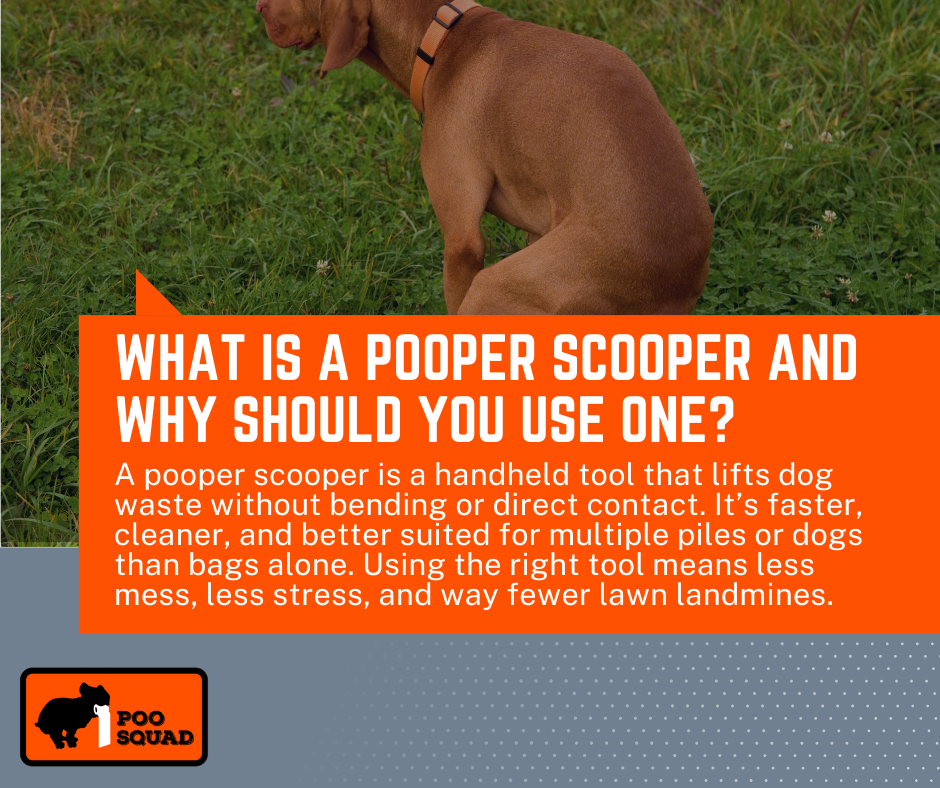
One of the most important things you can do for your yard, your shoes, and your dog’s health. A pooper scooper is a handheld tool designed to pick up pet waste without bending down or getting too close. It’s faster than using a bag, cleaner than using your hands, and more reliable when you’re managing multiple dogs or multiple piles.
Most dog owners begin with the classic bag-over-hand method, which works until it doesn’t. That method can get messy fast, especially in tall grass, after a rain, or when you’re managing more than one pet.
A good scooper not only speeds up the job, but it also saves your back, your patience, and your weekend.
While there are plenty of tools on the market, our sanitation and deodorizer services exist because most people underestimate how much cleanup matters. Dog poop is not fertilizer. It’s loaded with bacteria that kill grass and pollute storm drains if left too long.
And for those of us who care about clean spaces and safe dogs, cleanup deserves better than a last-minute once-over with a grocery bag.
Whether you’re working with a small backyard or managing a community dog run, using a dedicated tool is more than a preference; it’s a smarter, safer solution.
Choosing the Right Pooper Scooper for Your Yard & Dog
Not all scoopers are created equal. The best tool for the job depends on your dog’s size, your yard’s surface, and how much cleanup you’re dealing with. Whether you’re scooping daily or catching up after a long week, matching the tool to the terrain can make the difference between a quick task and a messy ordeal.
Jaw-Clamp, Rake, Spade, or Bag-Clipper? (Pros & Cons)
The jaw-clamp model is a go-to for many homeowners because it grips waste tightly and works on most surfaces. It’s ideal for patios, gravel, or artificial turf, and it usually operates with a one-hand squeeze, which is a lifesaver when you’re juggling a leash or corralling multiple pups.
Rake-and-bin combos are better for grassy areas. The rake gathers waste into a pile, and the flat scoop lets you slide underneath without damaging the lawn. If your dog prefers to “go” in different corners of the yard, this setup helps you cover more ground with less bending.
Spade-style scoopers are perfect for concrete or decks. They scrape waste cleanly without smearing, making them ideal for tighter or harder surfaces like apartment patios.
And for walks, clip-on bag scoopers or handheld tongs can save you from awkward sidewalk cleanup. These are lightweight and designed to work with standard dog waste bags.
If you manage a high-traffic yard or shared space, consider stepping up to a full-service routine with our commercial dog waste removal packages. They’re built for HOAs, kennels, and properties that need more than a quick pass.
Which Tool Works Best for Big Dogs or Soft Poop?
If you’ve got a large-breed dog, you already know cleanup can be a two-handed operation. Look for scoopers with wide jaws, deep bins, and extra-long handles to keep things clean and ergonomic. For soft or runny waste, standard tools tend to smear rather than scoop. In those cases, it’s better to pair a rake or spade with a lined bin and scoop gently from the edges inward.
Soft waste is one of the most common challenges our teams deal with during routine yard service. The key is choosing the right angle and tool, not rushing. And if the consistency keeps changing, it might be worth keeping an eye on your dog’s health or food intake.
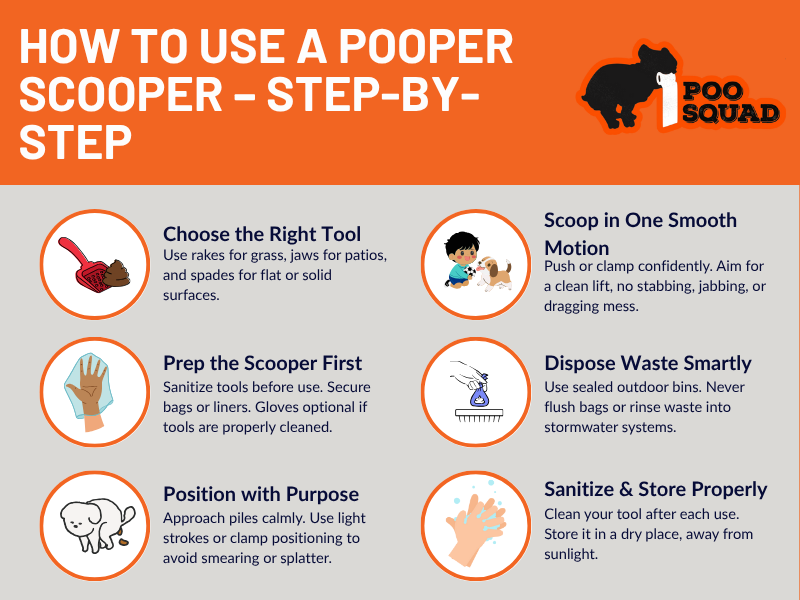
How to Use a Pooper Scooper – Step-by-Step
Learning how to use a pooper scooper the right way saves time, prevents mess, and makes the whole routine easier to stick with. Whether you’re tackling a week’s worth of yard duty or only a single pile on your morning walk, the key is preparation, proper positioning, and smart disposal.
Step 1: Preparation & Setup
Before heading into the yard, choose the right scooper based on your surface, rake combos for grass, jaw clamps for patios, and spades for concrete. If you’re using a liner or bag, make sure it’s secured. Some folks prefer wearing gloves for extra peace of mind, but with the right tool, you won’t need to get your hands anywhere near the mess.
Always start with a clean scooper. Bacteria from previous cleanups can linger on unwashed tools. That’s why we sanitize ours between every single yard.
Step 2: Position the Scooper
Approach each pile with intention. For rakes or spades, create a small pile by gathering stray pieces with a few light strokes. For jaw-style scoopers, position the open clamp just behind the waste and scoop in a fluid motion. Try not to jam or stab downward; this only makes things messier, especially in soft soil or wet grass.
If you’re cleaning up in an area with leaves or yard debris, work slowly and use the edge of the tool to sift through and isolate each pile.
Step 3: Scoop the Poop
Once positioned, apply even pressure and lift confidently. Rakes should push the pile into the bin; spades should slide beneath. Jaw clamps should close with a firm grip. The goal is a single clean motion without smearing or leaving residue.
Worried about missing piles in the grass? Create a zigzag walking pattern as you move through the yard. That grid-style search helps prevent accidental misses.
Step 4: Disposal Options
After collecting the waste, place it in a designated outdoor bin. Avoid tossing bags into your regular kitchen or garage trash; it only takes one warm afternoon for that to become a regret. Use a sealed container with a lid if possible.
Flushing dog waste might sound eco-friendly, but it depends on whether your city infrastructure and bag materials are up to the task. Never flush plastic bags or pour scooper rinse water into storm drains.
If you’re tired of the disposal struggle, our yard sanitation services include odor control and mess removal without any cleanup left behind.
Cleaning and Maintaining Your Pooper Scooper
A clean scooper works better, smells better, and lasts longer. Skipping this step is the fastest way to create odors, spread bacteria, or ruin an otherwise decent tool. Whether you’re using your scooper daily or weekly, proper maintenance keeps things sanitary and ensures you’re not trading one mess for another.
Cleaning Tools After Each Use
Right after disposal, rinse off your scooper using a hose or bucket of disinfectant. Pay attention to the inside edges, where waste or residue can stick. A mild pet-safe cleaner works well here. Avoid harsh chemicals if your pets have access to the area where you’re cleaning.
If you’re dealing with soft or sticky waste, a second rinse or wipe-down with disposable paper towels helps reduce buildup. Over time, even good scoopers can develop grime if they’re never cleaned properly. That’s one of the reasons our team sanitizes both tools and shoes between every job; cleanliness shouldn’t stop with the scoop.
Where to Store Your Scooper
Storage matters more than most people think. Tossing a used scooper into a garage corner or letting it sit in the sun can lead to warping, rust, or worse, smells that attract flies. Whenever possible, store your scooper upright in a dry, shaded outdoor spot. Some models are designed to stand on their own or hang from hooks for better airflow and easy access.
If you’re storing a rake/bin combo, separate the parts to let each dry fully. Moisture trapped in the bin or clamp can turn your tool into a bacteria trap. That’s also why many homeowners opt for occasional professional help with residential cleanup services, to maintain hygiene and sanity without constant tool upkeep.
Safety, Hygiene, and Cross-Contamination Prevention
Dog poop carries millions of bacteria, more than some people realize. A few bad habits with your scooper can easily spread those germs across your entire yard or home. That’s why keeping your tools clean and following basic hygiene principles is about more than comfort; it’s about protecting your pets, family, and neighbors.
Why Proper Sanitation Matters
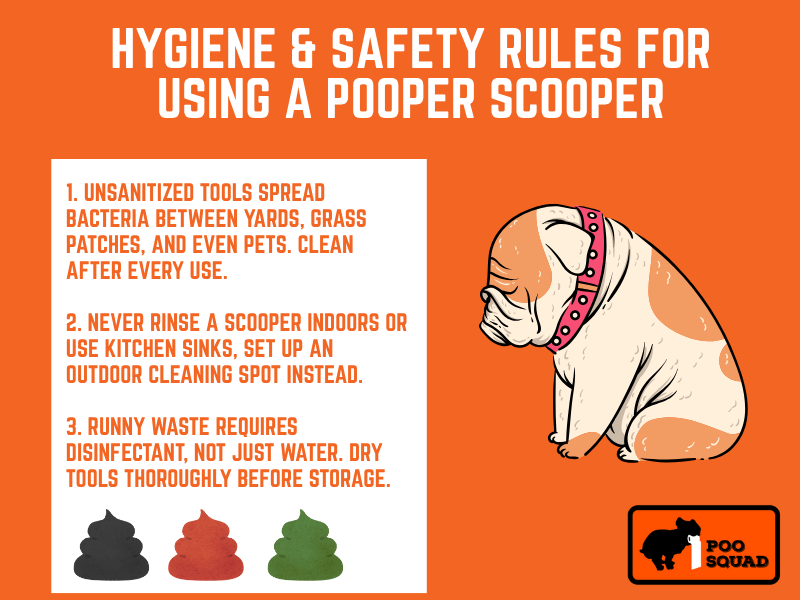
One gram of dog waste can contain over 23 million fecal bacteria. If that waste is scooped and your tool is not sanitized, you’re moving those bacteria from one patch of grass to the next. Viruses like parvovirus can survive in soil for months, making cleanup protocols essential, not optional.
We take that seriously. Every tool we use is sanitized between yards. Shoes too. That’s how we help prevent the risk of transmission between dogs. It’s also why we never use customer water hoses or trash bins; your property deserves better than shortcuts.
Avoiding Common Hygiene Mistakes
Leaving waste behind in an indoor trash can is a top mistake. So is rinsing a dirty scooper in a kitchen sink. Set up an outdoor cleaning spot and stick to it. Use gloves if you’re handling raw waste, and never touch your face mid-cleanup.
Another issue? Skipping tool cleaning after soft or runny waste. This type of mess spreads more easily and sticks to tool surfaces. For that, a rinse won’t cut it, use a pet-safe disinfectant and dry thoroughly before putting it away.
If this sounds like more than you want to deal with every week, our yard deodorizer and sanitation plans take care of it all, tools, cleanup, and bacteria prevention, done safely and consistently.
Ergonomic Tips for Easier Scooping
Picking up dog poop might not seem physically demanding, but poor tool design and bad posture can wear you down fast, especially for older owners or those with large yards. A few ergonomic upgrades to your routine can prevent soreness, reduce cleanup time, and make the entire process less of a chore.
Use Tools That Match Your Height and Yard
One of the most common complaints we hear is back pain from constant bending. Long-handled scoopers solve that immediately. Choose a tool that allows you to stay upright while working; your lower back will thank you.
If your dog goes in the same few spots, shorter handles might work. But for larger yards or more frequent cleanups, stick with adjustable or extended-length handles.
Our team uses tools that are built for all-day use, and it makes a difference. If a scooper leaves you hunched over, straining to grip it, or juggling a leash with your non-dominant hand, it’s time for a better setup.
Choose Comfort-Grip Handles
Thin plastic handles can dig into your palms after only a few scoops. Look for comfort-grip or rubber-coated handles to reduce fatigue. This is especially helpful if you’re cleaning up after multiple dogs or dealing with waste that’s tough to remove from the ground.
Lighter tools also help reduce strain. Some models are aluminum or composite plastic, which makes them easier to lift without sacrificing durability. Whether you’re scooping from gravel, grass, or patio, weight and grip both make a noticeable difference.
If cleanup is becoming a literal pain, our residential scooping services offer a hands-free option that protects your yard and your spine.
Common Mistakes to Avoid (and How to Fix Them)
Even with the right tool in hand, a few simple missteps can make scooping harder than it needs to be. From rushed jobs to skipping sanitation, these mistakes often lead to bigger problems, like lingering smells, dead patches of grass, or worse, an unhappy household.
Using the Wrong Scooper for the Surface
Grass, gravel, concrete, and mulch each demand different tools. Using a rake on concrete will leave you scraping and frustrated, while a spade on grass can damage the turf. Take a minute to match your scooper to the surface before starting. It makes cleanup smoother and faster.
Neglecting Sanitation After Each Use
A dirty scooper spreads bacteria and attracts flies. Always rinse or disinfect your tools after every use. This step takes less than a minute and keeps your tool functional and odor-free. It also protects pets from bacteria that can linger on improperly cleaned surfaces.
We don’t cut corners here. All of our tools are sanitized between yards, and it’s something we take pride in. Consistency is everything when it comes to staying clean.
Skipping Soft Poop or Debris-Covered Waste
It’s tempting to leave messy or half-hidden piles until “next time,” but that leads to a buildup and increased smell. Soft waste spreads easily if left too long, especially when it’s been walked on or run over by a mower. Always scoop around the edges and work inward. For debris-covered piles, clear the area first.
And yes, chopping it up with the mower is a terrible idea. That only spreads bacteria into the air and pushes harmful pathogens deeper into your soil. Our sanitizing service exists for exactly that reason.
Leaving Gates Unlatched or Tools Out
Forgetting to close your gate can be dangerous, especially if your pup gets out before you realize it. Always double-check gates after cleanup. We triple-check every gate and send a photo to clients as proof.
Also, never leave your tool exposed to the sun and rain. Storage matters. Keep it upright, dry, and accessible, but out of the elements.
Best Practices for a Cleaner Yard (And Happier Dog)
A consistent poop-scooping routine not only keeps your yard clean, it improves your dog’s health, reduces family stress, and keeps neighbors happy. With a few smart habits, you can stay ahead of the mess and keep your space looking (and smelling) its best.
Stay Consistent With Cleanup
The longer waste sits, the harder it is to clean. Set a schedule that works, daily, every other day, or at least twice a week. Routine pickup reduces smell, protects your grass, and lowers the chance of anyone accidentally stepping in it. If time is tight, professional help can make all the difference.
Use Deodorizer or Sanitizer as Needed
Especially in summer or after rain, your yard may hold onto odors even after waste is removed. That’s where a safe, pet-friendly deodorizer comes in. Our yard sanitation services are built for this, deep cleaning surfaces like patios, dog runs, and high-traffic play areas.
Pay Attention to Your Dog’s Patterns
Noticing where and how your dog tends to go can make scooping faster. Dogs who stick to corners or one side of the yard are easier to clean up after. Those who roam and drop as they go? You’ll want a scooper that can cover more ground with ease.
Bonus tip: Keep an eye on consistency. Soft or unusually colored waste might mean something’s off in your dog’s diet or health.
Don’t Forget the Human Factor
A cleaner yard means fewer family fights. We’ve heard from clients who said our services saved their marriages because no one wanted the job, and no one was doing it. Whether you’re delegating the task or ready to hand it off entirely, keeping your yard clean removes one more stressor from the daily routine.
When a Pooper Scooper is not Enough, Try Our Services
Some weeks, no matter how good your intentions are, the yard gets ahead of you. Life is busy. Work piles up. The kids forget. And suddenly, what should’ve been a 10-minute chore turns into an hour-long cleanup no one wants to do. That’s where we come in.
The Smarter Way to Stay Clean
Our dog waste removal services were built for real life. We offer scheduled reminders, safe and sanitary cleanups, and reliable service you don’t have to think twice about. You’ll always know when we’re on the way, and we’ll never leave a mess behind or dump it in your trash can.
If you’ve got a yard that needs more than a quick once-over, or you’re tired of spending your weekends with a rake in hand, our residential pooper scooper plans are here to help.
Beyond the Basics
From commercial properties to one-dog households, we show up with clean tools, bright orange uniforms, and a focus on getting the job done right. No shortcuts. No weird surprises. Whether you need routine cleanups or full yard sanitation, we’ve got options to fit your needs.
And if your pup tends to leave “creative” surprises (we call those poocassos), we know how to handle it, no judgment, no stress.
Ready to Stop Arguing About the Yard?
Clean yards save time, keep peace at home, and make your outdoor space usable. If you’re ready to skip the mess and stay ahead of the stink, let us do the dirty work.
Schedule your first poop scoop service now and discover why so many dog owners trust us to clean up where their pets leave off.
You’re Ready
You’ve got the tools, the steps, and the know-how to keep your yard clean without breaking your back or your spirit. Whether you’re scooping once a day or playing catch-up every Saturday, doing it right saves time, avoids messes, and makes life with dogs a whole lot more enjoyable.
Remember, the right scooper depends on your yard, your dog, and how often you plan to clean. Stick to a routine, clean your tools, and if it ever feels like too much, there’s always help waiting.
Questions from Dog Owners Answered
You’re not the only one with questions about scooping. New dog owners and long-time pet parents alike run into the same concerns, some small, some surprisingly common. Here are a few real-world questions and honest answers to help you feel more confident every time you step into the yard.
Why complicate it with a scooper? Is that not a bag?
Bags are fine in a pinch, but they’re not always the best choice for backyards or multiple piles. Scoopers offer better hygiene, less bending, and more efficiency, especially on tricky terrain like gravel or thick grass. Plus, tools reduce your direct contact with waste and cut down on odor spread.
Which scooper works on tall grass?
Rake-and-bin combos work best here. The rake helps pull waste out of hidden spots, while the bin lets you scoop without flattening the grass. If your yard grows fast or your dog prefers the back corners, this setup keeps cleanup from turning into a full-blown scavenger hunt.
How do I get my kid to help?
Pick a scooper that’s lightweight and easy to use. Some families even turn it into a mini game with rewards. It helps to have tools that don’t feel like punishment; something with comfort grips or a fun color makes it less of a chore and more of a shared responsibility.
How do I deal with soft or mushy poop?
Work from the outside in. Use a rake or spade to gently lift the edges first. Soft waste spreads easily, so avoid pressure or scraping. If you deal with this often, adding some dry leaves or mulch under your dog’s go-to spot can make collection easier.
Where do I keep this thing?
Keep it outside, upright, and dry. Hang it from a fence, store it in a bin, or place it in a shaded spot. Keeping your scooper out of the elements and away from indoor storage is key to keeping smells down and tools in working order.

Author: Chief Scooper
Jamie Coones is the Founder and Chief Scooper of Poo Squad, a national dog waste removal company operating in over 20 locations across the United States. Since launching the company in 2017, he has helped redefine the pooper scooper industry through systemized operations, subscription-based service models, and a mission-driven approach to business ownership.