Maggots in dog poop appear when flies lay eggs on waste left outside for too long. It’s usually not a health issue for your dog, but it is a sign that yard cleanup needs to happen faster. Quick removal and sanitation stop infestations before they start.
Maggots in dog poop aren’t a sign of infection; they’re a sign of delay. When dog waste sits in the yard for even a few warm hours, flies show up, lay eggs, and leave larvae behind. It looks disturbing, smells worse, and sends pet parents into panic, but most of the time, it’s not coming from inside your dog.
Here is why maggots show up, how to tell if it’s a hygiene issue or a health concern, and what to do when the wriggling starts.
You’ll learn the difference between fly larvae and intestinal worms, what conditions trigger an infestation, and how to stop it from happening again, whether through better timing or a cleanup routine you don’t have to manage yourself.
If you’ve already found maggots in your yard, don’t worry, you’re not alone, and it doesn’t mean you’ve failed. But it is your signal to act fast. We’ll walk you through safe removal, prevention strategies, and when to call a vet vs when to call the scooper team.
What Are Maggots?
Maggots are the larval stage of flies, and they only show up when waste sits out long enough to become a breeding ground. They are external invaders, not internal parasites, and they have nothing to do with whether your dog is sick, unless they’re showing up somewhere other than the yard.
Maggots vs. Worms in Dog Poop
This is where most people start to spiral. You see something squirming in the poop and assume it came from inside your dog. In reality, you’re likely looking at fly larvae that hatched outside the body.
True intestinal worms, like tapeworms, appear as flat, rice-sized segments and often move differently. They also tend to show up in or around the dog’s rear, not crawling all over outdoor waste.
If you want a reliable way to know whether what you’re seeing is external or internal, timing and location are everything. If the poop sat out for a few hours or overnight, especially in warm seasons, you’re probably seeing maggots. If you’re unsure or see anything moving near your dog’s anus, that’s when a vet should be your next call.
Can Maggots Come From Inside My Dog?
This is one of the most common fears, and we get why. The good news is, in nearly all cases, they don’t. When maggots do show up in poop that hasn’t been exposed to air long, it may be a case of your dog eating something already infested, think trash, compost, or even outdoor leftovers, and passing it through.
This rare condition is known as pseudomyiasis. It might look disturbing, but it’s generally harmless. Concern starts with something called myiasis, where maggots infest living tissue, usually around open wounds or severe skin infections. If your dog is licking excessively, scooting more than usual, or has any kind of raw area, it’s time for a professional look.
Why Are There Maggots in My Yard’s Dog Poop?
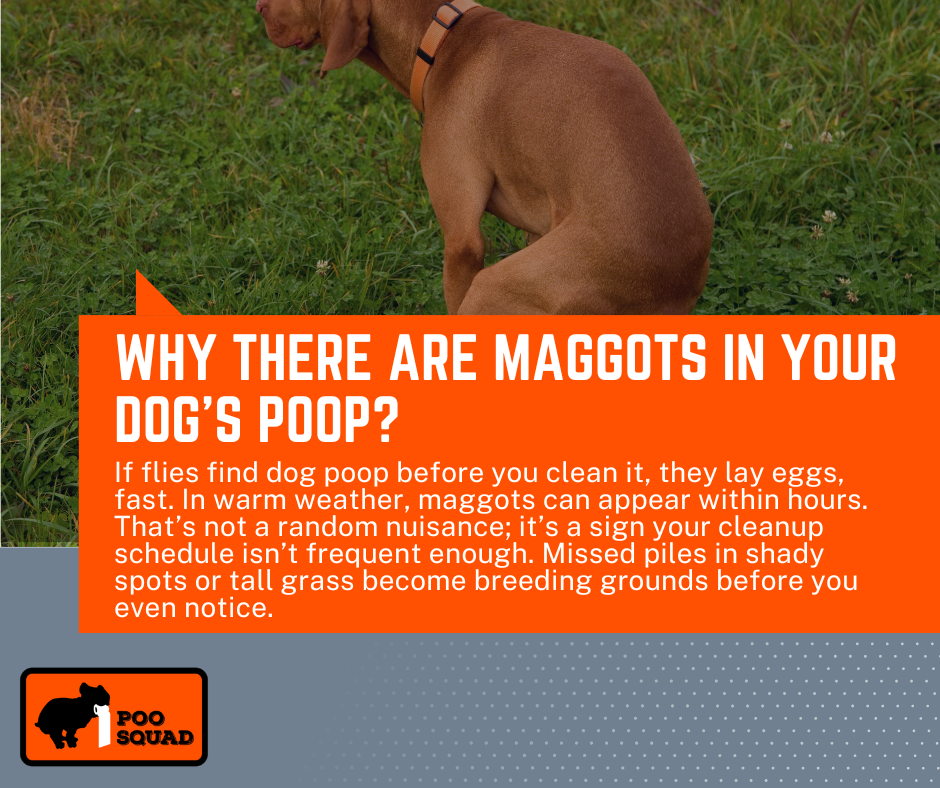
When dog poop sits untouched in a yard, especially during warm or humid seasons, it becomes an instant magnet for flies. Maggots aren’t the problem, they’re the symptom. What they’re telling you is that your yard waste is staying around long enough to become a fly nursery.
Timeline of Infestation
It doesn’t take long. Within 15 to 30 minutes of your dog doing their business, flies can land, lay eggs, and be gone. By the time you get home from work or come back outside after dinner, those eggs are already turning into larvae. The hotter it is, the faster it happens.
This is why routine, on-time removal matters. Weekly cleanups are usually enough in moderate climates, but in peak summer, we recommend biweekly. Our yard sanitation and deodorizer service also eliminates residual bacteria and odor, both of which act like a dinner bell for flies.
Hidden Waste = Hidden Risk
Maggots thrive on poop you forgot about. Under tall grass, behind the shed, or in that one shady corner, these are the danger zones. We call them “hot pockets” because they incubate unnoticed.
Certain dogs also make it harder to track. If your pup likes to poop while walking (“waddling bandits” as we call them), their waste gets scattered. That increases surface area for flies and raises the odds of you missing a pile. Even a single overlooked mess can lead to a full-blown maggot situation within 24 hours.
This is why we walk every yard in a grid pattern and double-check all perimeter zones. Our detailed yard cleanup approach ensures no pile gets left behind, even the sneaky ones hiding under bushes or near fence lines. You don’t need a biology degree to prevent maggots; you need consistency, vigilance, and someone who won’t skip the corners.
Is My Dog Sick If I See Maggots?
Seeing maggots in your dog’s poop doesn’t automatically mean there’s something wrong with your pet. Most of the time, it points to a delay in cleanup, not an internal issue. That said, there are a few red flags to watch for that may indicate a deeper problem.
What’s Normal (External Infestation)
If you find maggots in poop that’s been sitting outside for more than an hour or two, that’s not coming from inside your dog; it’s from flies. That’s especially true if the poop was in a hot, sunny spot or anywhere with moisture.
The good news? This kind of infestation is completely preventable. Routine cleanups and automated reminder texts before service help keep waste from ever reaching the maggot stage. We handle the scooping on schedule so your yard doesn’t turn into a bug buffet.
How did I still get maggots if I bagged the poop and put it in the trash?
The answer usually lies in the delay. If you let the bag sit outside, even for a few hours, flies can sneak in before you notice. Once inside, even sealed bags can hatch larvae if stored in warm areas like garages or uncovered bins.
What’s Concerning (Medical Issues)
The moment maggots are found near your dog’s body, around the tail, anus, or in an open wound, that’s when you need to contact your vet. This condition, called myiasis, means flies have laid eggs on the dog itself, not the waste.
You’ll usually see signs before it gets this far:
- Excessive licking or biting at the rear
- A foul odor was coming from their backside
- Redness, irritation, or visible skin damage
Dogs with diarrhea are also more vulnerable. Loose stool spreads more easily and stays moist longer, creating the perfect breeding ground for flies. We’ve seen this with what we call “pudding pups”, dogs dealing with GI issues that need extra attention both medically and in cleanup. A dog with chronic loose stools should be monitored closely, both for health reasons and sanitation concerns. To better understand what your dog’s poop might be telling you about their health, check out this breakdown on what different poop colors and textures really mean.
How to Get Rid of Maggots in Dog Poop (and Yard)
Getting rid of maggots doesn’t take fancy tools or extreme chemicals; it takes speed, proper disposal, and consistency. The goal is to break the cycle by removing the food source that flies rely on before their eggs can hatch.
Step-by-Step Safe Removal
First, gear up. Always wear gloves and use a designated scooper or shovel. Pick up the poop and maggots in one swift motion, and place everything in a tightly sealed bag. Do not toss that bag into an open trash can. Maggots can survive in surprising conditions, especially if the bin is warm and poorly sealed.
Your best bet?
Place the waste in a hard-sided trash bin with a tight lid that’s stored away from direct sunlight. Avoid dumping it into small outdoor cans or uncovered compost piles, as these only invite more flies to the party.
Once the waste is gone, rinse the area with hot water or a pet-safe disinfectant if the infestation was heavy. Keep in mind: spraying alone won’t fix the issue long-term. It might mask the smell, but unless you remove the root cause, aging waste, you’ll be right back where you started.
DIY vs Pro Cleanup
You can clean up maggots on your own. But if you’re dealing with chronic problems or large yards where waste gets missed, a professional cleanup can save time and your sanity.
Our yard sanitation and deodorizer service doesn’t stop at scooping. We disinfect contaminated areas and neutralize odor trails that attract flies. All tools are sanitized between stops, and waste is stored in sealed transport containers so maggots never get the chance to spread from one yard to another.
If your schedule keeps you from staying ahead of the poop, our residential pooper scooper team can take that burden off your hands. We’re in and out on a consistent schedule, so your yard never turns into a buffet for bugs.
When we say we leave no poop behind, we mean it. And that’s exactly how you stop the next batch of maggots before it ever hatches.
How to Prevent Maggots in Dog Poop
Stopping maggots before they ever appear comes down to one thing: don’t give flies the chance. With a few simple shifts in your routine and help from a team that knows what to look for, you can make your yard a no-fly zone for good.
Remove Waste Promptly
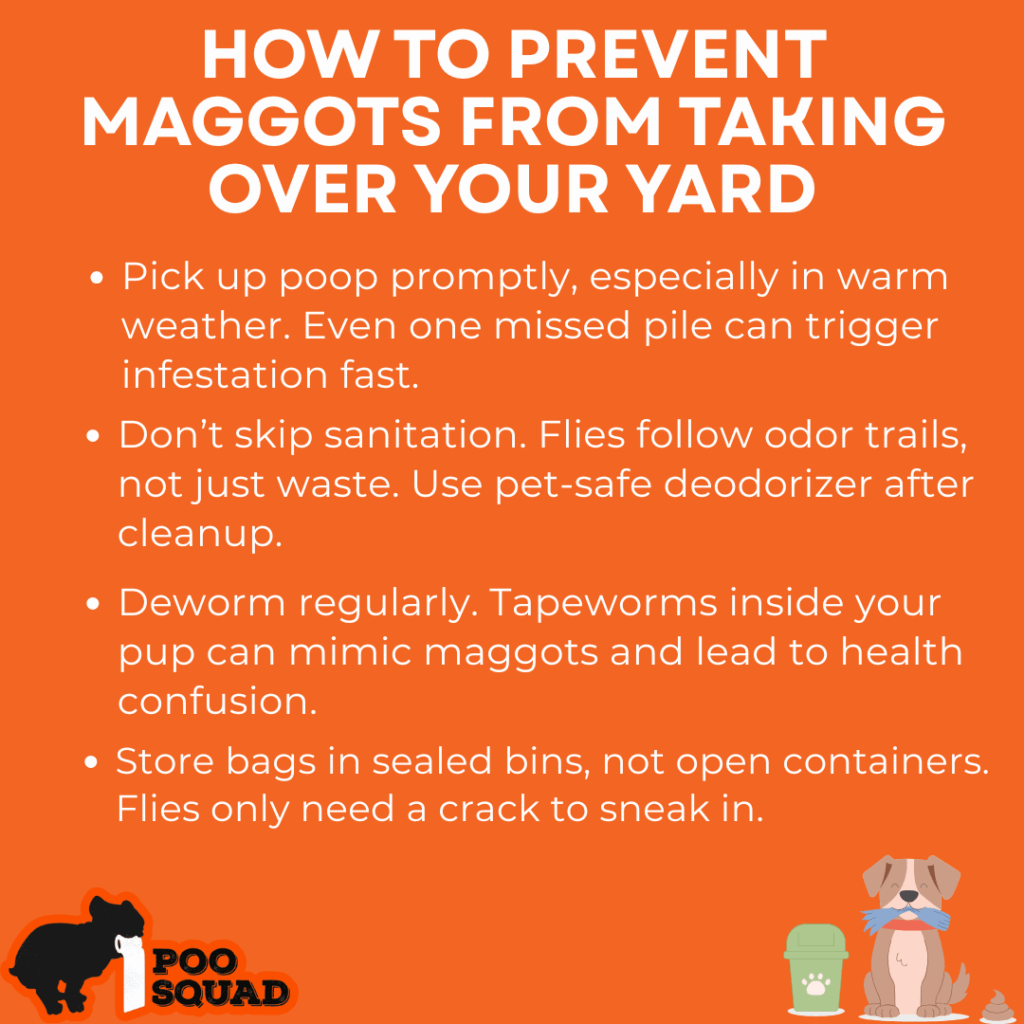
The faster the poop is picked up, the less chance flies have to lay eggs. Even one missed pile during a hot week can become a hatchery. That’s why our residential pooper scooper service is designed to run like clockwork. You’ll get a morning reminder and another alert when we’re about 10 minutes away, so you always know the job’s handled.
We’ve seen it time and again: families delay cleanup until weekends because of work, weather, or nobody wanting to draw the short straw. That delay is what gives flies the upper hand. A once-a-week service can eliminate this gap and eliminate the larvae along with it.
Yard Sanitation & Deodorizer
Even after the waste is gone, odors and bacteria stick around. Flies pick up on these trace signals like bloodhounds, returning to spots where poop used to be. Our yard sanitation and deodorizer treatment cuts that signal off completely.
We apply pet-safe cleaners that kill bacteria and neutralize odors on patios, grass, dog runs, and anywhere else your pup likes to do their business. It’s especially helpful for households dealing with “pudding pups” or dogs who’ve had digestive issues; those spots need extra attention to stay maggot-free.
Dog Deworming & Flea Control
While maggots usually come from outside, worms inside your dog can lead to confusion and concern. Tapeworm segments often resemble rice grains and are sometimes mistaken for larvae. These internal parasites don’t cause maggots but do need vet care.
Regular deworming and flea control stop the tapeworm cycle before it starts. If your dog is scooting, licking, or showing signs of GI distress, it’s smart to rule out parasites with your vet.
Trash Storage Best Practices
This is where many people slip up. Bagging the poop is not enough; it’s where and how that bag is stored that matters. If you’re unsure about proper disposal methods, here’s a guide on how to get rid of dog poop the right way.
Use a sealed, hard-sided bin, preferably one kept in a shaded or indoor location. Avoid leaving waste in grocery bags or open-top bins where flies can sneak in.
If your trash system feels like it’s working but maggots keep showing up, this is the first place to look. Even a slightly cracked lid can undo all your efforts.
Why This Happens (and Why It’s Not Your Fault)
Finding maggots in your yard is not a sign that you’re careless. It’s a sign that life gets busy, and this chore always lands at the bottom of the list. The good news is, you’re not alone, and you’re not stuck dealing with it forever.
Shame-Free Cleanup
We’ve talked to hundreds of families who admit to falling behind on poop duty. Between work, school, sports, and trying to hold everything together, scooping up after the dog rarely takes top priority. In winter, it’s dark before you even get home. In summer, you’re juggling kids, vacations, and maybe even hosting guests.
Sound familiar?
We’ve heard it all, from “I thought my husband did it” to “my teenager promised me they would.” The result is usually the same: someone frustrated, a pile of poop that sat too long, and maggots reminding you that nature doesn’t wait.
That’s why our weekly scooper service exists. We’re not judging, we’re showing up when you can’t, doing the dirty work, and making sure your backyard doesn’t become another weekend headache.
The Emotional Toll
Nobody likes that moment when a friend walks into your yard and spots something squirming. It’s gross, it’s embarrassing, and it makes you feel like you’re falling behind. And if you’re like many of our clients, it’s probably the tipping point where you finally say, “Okay, I need help.”
You’re not lazy. You’re not irresponsible. You’re only tired of taking crap, literally. And that’s why we’re here.
Your Yard Doesn’t Have to Be a Breeding Ground
Maggots in your dog’s poop may feel like a crisis, but they’re a clue. A clue that waste sat out a bit too long, that flies found it, and that your yard is ready for a new routine. They’re not coming from inside your dog, and they don’t mean you’ve failed as a pet parent.
With routine cleanups, yard sanitation, and smart disposal habits, you can shut down the maggot problem before it starts. If you’ve been juggling a million things and poop patrol keeps slipping through the cracks, it’s okay to pass the shovel. We’re ready when you are.
Schedule your first service today and take maggots off your mental load, for good.

Author: Chief Scooper
Jamie Coones is the Founder and Chief Scooper of Poo Squad, a national dog waste removal company operating in over 20 locations across the United States. Since launching the company in 2017, he has helped redefine the pooper scooper industry through systemized operations, subscription-based service models, and a mission-driven approach to business ownership.
Where is this service located?