
Yes, HOAs can enforce dog rules, including barking limits, leash laws, breed or size restrictions, pet limits, and cleanup fines. These rules are legally binding and typically outlined in your HOA’s governing documents or bylaws.
Yes, HOAs can regulate your dog’s behavior, breed, size, and even how many pets you have. Most homeowners are surprised to learn how detailed these rules can be, from leash requirements and barking time limits to fines for missed poop pickup. These aren’t suggestions, they’re enforceable policies written into your community’s bylaws.
Whether you’re facing a complaint, moved into an HOA-managed property, or trying to avoid issues altogether, it’s important to understand what rules apply and how they’re enforced. That’s not always easy, especially when board decisions feel arbitrary or unclear.
Here are the most common HOA dog restrictions, how to challenge unfair fines, and how to stay compliant without drama. We’ll also show how professional cleanup services and consistent documentation help pet owners avoid conflict, maintain neighbor goodwill, and keep their pets safe in even the strictest communities.
Common HOA Dog Rules You Should Know
Homeowner associations are structured to protect property values and maintain a peaceful community environment. That’s why nearly all of them include a set of pet-related rules designed to balance the needs of dog owners with those of non-pet-owning neighbors. Whether you’re in a gated community, suburban cul-de-sac, or a high-rise condo, these rules tend to follow familiar patterns, some reasonable, others overly restrictive.
1. Pet Registration Requirements
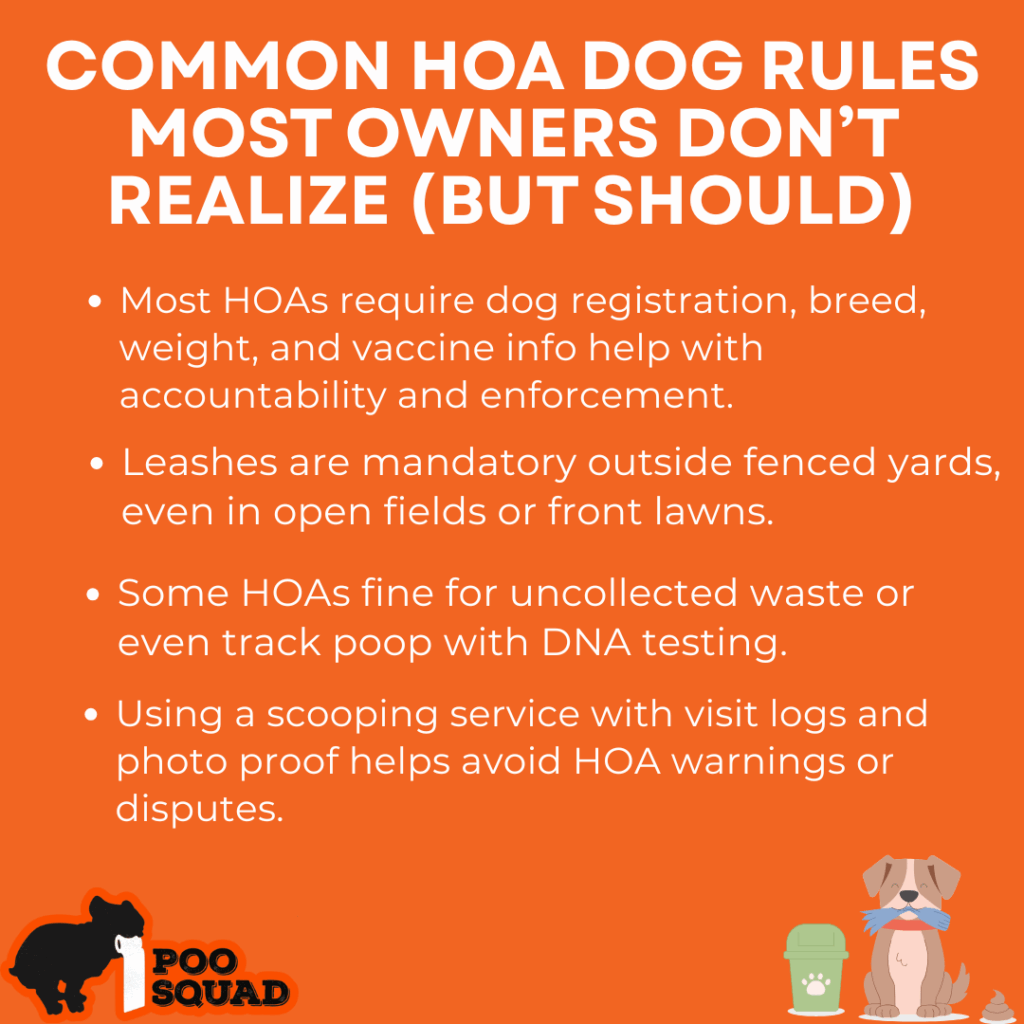
Many HOAs require pet owners to register their dogs with the board or property manager. This usually involves disclosing the breed, weight, vaccination status, and occasionally signing off on the pet policies.
The logic?
Accountability. When issues arise, like waste complaints or off-leash encounters, having records makes enforcement and resolution faster.
Internal note: If you’re using our residential pooper scooper service, the routine visibility of our uniformed team and automated notifications often satisfies the HOA’s expectation of “awareness and control.”
2. Leash Policies and Common Area Restrictions
Leash rules are nearly universal. Most HOAs require dogs to be on a leash anytime they’re outside your fenced property, even in open community fields. This minimizes liability and ensures shared spaces stay safe for everyone. Many also designate “no-pet” zones around pools, playgrounds, and walking paths.
Clients often ask if they can let their dog roam in their front yard off-leash. If it’s not enclosed, the answer is no. A homeowner’s lawn is still considered visible common space in many HOA contracts. It’s better to be safe and clipped.
3. Cleanup Obligations and Fines
This is where things tend to get heated. HOAs have the right to fine homeowners who don’t pick up after their pets, and many boards install dog waste stations throughout the neighborhood to make it easier. If they still get complaints, some communities go as far as requiring DNA registration of dogs to match waste samples to owners.
For those in communities we serve, using our weekly scoop service not only keeps yards clean but also builds trust with the HOA. Photos of closed gates and proof of visit logs go a long way toward avoiding unfair accusations or warnings. Internal linking fits naturally with our commercial service page if the HOA is considering a full-service option for the neighborhood.
Breed, Size, and Quantity Limits: Are They Legal?
Most homeowners don’t expect their HOA to have a say in what kind of dog they can own until they move in and read the fine print. Breed and size limits are among the most controversial HOA dog rules.
Some communities enforce them rigidly, others use vague language that leaves room for interpretation. Either way, it’s critical to know what’s allowed, what’s enforceable, and how to protect your rights as a dog owner.
1. Breed Restrictions
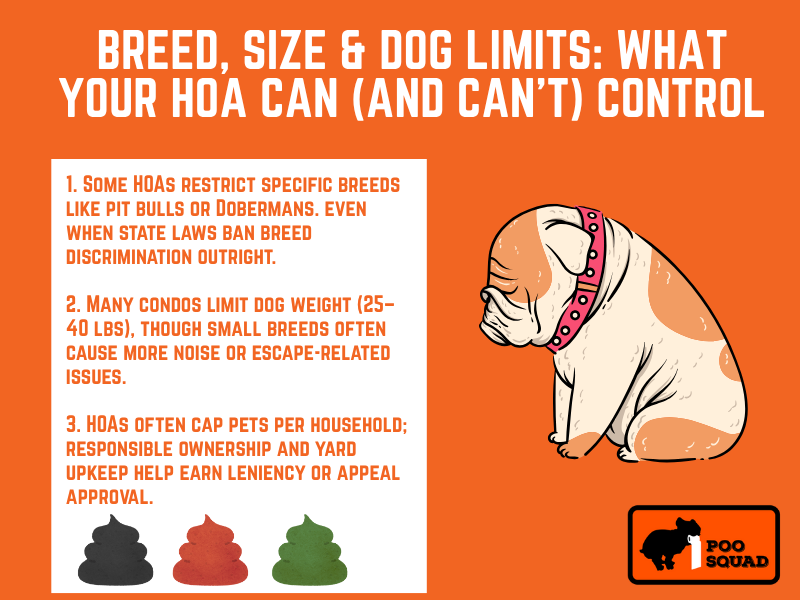
HOAs sometimes maintain a list of “restricted breeds,” often including dogs like pit bulls, Rottweilers, and Dobermans. The stated goal is to reduce perceived risk, but these rules can be problematic, especially in states where breed-specific legislation is banned.
If you’re facing breed discrimination in your HOA, review state law first. Some regions prohibit HOAs from using breed as a disqualifier altogether. If your dog has a clean behavior record, presenting vet letters or proof of training can strengthen your case.
Our team has supported several clients who used poop behavior data, yes, seriously, to demonstrate that their so-called “aggressive” dog was more of a “sharp shooter” or “pudding pup.” Humor aside, clean records and responsible habits go a long way with HOA boards.
2. Dog Size and Weight Caps
High-rise condos and townhomes often limit dogs by weight, typically 25 to 40 pounds, under the assumption that larger dogs cause more damage or noise. In practice, it’s often the little ones who bark more or sneak through gaps in fencing.
The better approach is individual accountability. If you’re a responsible pet owner using services like our residential waste removal and maintaining control over your dog’s behavior, many boards are open to exception requests. It’s always better to be proactive and respectful than confrontational.
3. Limits on the Number of Dogs
Most HOAs cap the number of pets per home at one or two. The concern? Noise, cleanup issues, and potential overcrowding. But these rules can vary, some grandfather in existing pets or allow appeals if all animals are well-cared-for.
If you’re over the limit due to fostering, a new rescue, or blending households, communicate early. Boards tend to be more flexible when they’re informed and not surprised. Regular service records and consistent yard maintenance can serve as informal proof that you’re handling things responsibly.
Noise & Behavior Complaints
No one wants to live next to a dog that barks for hours. But sometimes, what one neighbor calls “nuisance barking” is a dog being a dog. HOA rules about pet noise and behavior are meant to keep the peace, but they can easily cross into gray areas, especially when complaints are exaggerated or retaliatory.
Understanding how these rules are enforced and how to defend yourself if you’re unfairly targeted can save a lot of stress.
1. Barking Time Limits and “Quiet Hours”
Most HOA rules include a clause about “excessive noise,” often with no clear definition. Barking that’s constant or occurs late at night is usually the trigger for complaints. Some communities establish quiet hours, commonly from 10 PM to 7 AM, during which barking must be minimal or nonexistent.
If your dog tends to vocalize when alone, consider training or using indoor toys to keep them calm, especially during events like fireworks, which can increase anxiety. And if a neighbor claims your dog is disturbing them, ask for timestamps or recordings; many HOAs require more than a verbal complaint before acting.
2. Aggressive Behavior and Enforcement
Aggression is another common flashpoint. If a dog growls, lunges, or bites, even once, the HOA may require intervention, or in some cases, removal. The frustrating part? Sometimes behavior is misread or exaggerated, especially in tense neighbor dynamics.
This is where evidence matters. If you’ve invested in professional training, obedience certifications, or regular health checks, you’re in a better position to defend your dog. Some of the clients we serve also mention that our regular visits help reinforce structure and calm, especially for dogs with anxiety or a tendency to act out when overstimulated.
3. What If You’re Blamed for Something You Didn’t Do?
It happens more than people think. A neighbor reports poop in a shared space or noise from a certain direction, and your dog becomes the suspect by default, especially if they’re larger or part of a stigmatized breed.
Before the situation escalates, gather proof. Video clips, timestamps, and even confirmation messages from your cleanup service can all help. If your HOA allows appeals, use them. If the board is unresponsive, a polite paper trail can protect you in case things reach a legal level.
Pet-Related Fines, Enforcement & Legal Limits
HOAs are allowed to issue fines when pet rules are broken, but that doesn’t mean every fine is fair, or even enforceable. Whether it’s a poop pickup violation, an unregistered pet, or barking complaints, boards have a process they’re supposed to follow. Knowing your rights and your options makes all the difference.
1. What Types of Fines Can HOAs Issue?
Typical violations include:
- Failing to clean up after your dog
- Letting a dog off-leash in common areas
- Exceeding pet count or weight limits
- Ignoring registration or vaccine requirements
- Persistent noise disturbances
Fines usually start small but can escalate quickly. Some HOAs even threaten lien placements if you ignore repeat warnings, so staying ahead of the issue is important, especially when you’re dealing with dog poop laws that vary by state.
We’ve heard from clients who were shocked to get fined after missing a single cleanup day. But if you’re using a professional pet waste removal service, having confirmation of service visits and gate closure photos can help you challenge unfair penalties.
2. What If You Want to Appeal a Fine?
Most HOAs have an appeals process, though many homeowners don’t realize it. Start by reviewing your CC&Rs or bylaws to find the proper steps. Appeals often require:
- A written explanation of your side
- Supporting evidence (photos, vet records, service logs)
- A deadline for submission, often within 10–30 days of notice
If your board refuses to listen or skips protocol, document everything. A respectful but thorough email history can protect your position if the issue escalates.
3. What’s Legal, and What’s Not?
While HOAs can enforce rules, they’re still bound by local, state, and federal laws. Some things they can’t do:
- Ban verified service animals
- Enforce breed restrictions where state law prohibits it
- Demand private surveillance footage without a legal basis
- Fine you without proof of violation or proper notice
We’ve also seen HOA boards try to require homeowners to use a specific pet cleanup company. That’s a gray area. While they can recommend vendors, mandating one without community approval or contract alignment may cross a legal line.
How HOAs Can Keep Pet Areas Clean (Without Creating Conflict)
Managing pet waste in shared spaces doesn’t have to create tension between residents and board members. Some of the most well-run HOAs use proactive solutions that eliminate complaints before they happen. The key is visibility, consistency, and systems that work.
1. Designated Pet Zones and Community Dog Parks
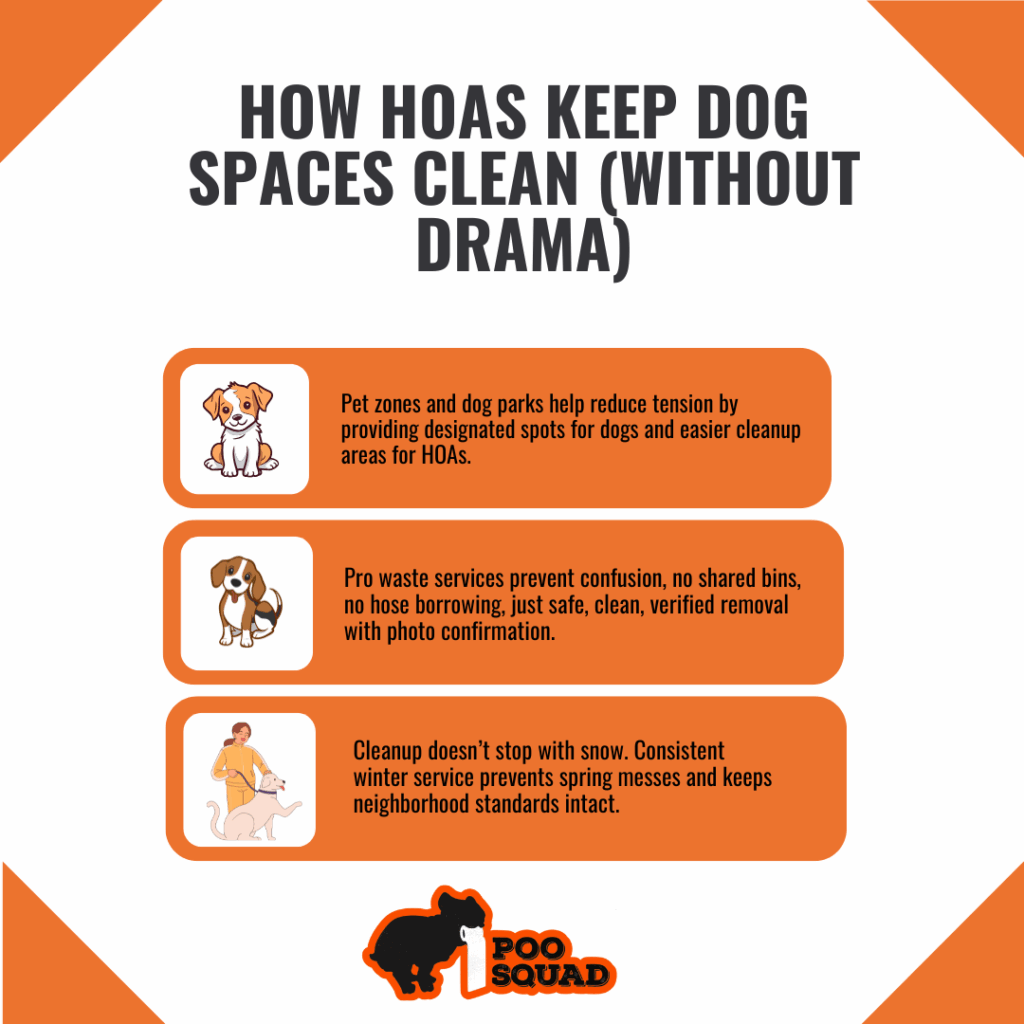
The most pet-friendly communities think ahead. Designated pet areas, like walking paths, grass runs, or fenced dog parks, give owners a clear space to take their dogs without risking conflict or fines. They also concentrate maintenance efforts, making cleanup easier and more predictable.
Many boards use signage, posted rules, and simple etiquette reminders to reduce misuse. But these areas only work when they’re maintained regularly, which is where structured cleanup services make a real impact.
2. How Smart HOAs Use Professional Pet Waste Services
The HOAs we support often come to us after receiving an uptick in resident complaints, uncollected waste, gate security concerns, or questions about who’s responsible for specific areas.
Our commercial dog waste removal solves those headaches in one step. We don’t use homeowner hoses or leave bags in the resident trash bins. Instead, everything is handled, hauled, and documented, so there’s zero guesswork or residue left behind.
We also sanitize tools between yards, wear high-visibility uniforms, and provide real-time photo confirmations that gates are closed and secured. This extra layer of accountability builds trust with homeowners and offers the board a no-conflict solution to an age-old problem.
3. Year-Round Service (Even in Snow and Mud)
A common misconception is that cleanup doesn’t matter during winter. But waste doesn’t disappear in the cold; it piles up. Then, when the snow melts, you’re left with a much bigger mess.
That’s why our clients stay on schedule year-round, including those in HOA-managed neighborhoods. Missed pickups during heavy weather aren’t skipped; they’re banked and cleaned on the next accessible visit. This kind of consistency keeps property managers happy and fines off your back.
HOA Rules vs. Your Rights as a Dog Owner
Not all HOA rules are created equal, and not all of them are enforceable. While the goal of most pet-related rules is to promote harmony, there’s a line between community standards and personal overreach. Understanding where that line is helps you protect your pet, your home, and your peace of mind.
1. Can They Demand Access to Your Yard?
Some HOAs include clauses that allow board members or their agents to inspect yards for rule violations. But even then, they must typically provide notice and cannot force entry without your permission, unless there’s a clear emergency.
If a complaint has been filed against you for uncollected waste or a loose dog, the HOA may request access. You’re within your rights to ask for written notice, the reason for inspection, and a mutually agreed-upon time.
2. What About Service and Emotional Support Animals?
Verified service animals are protected by federal law. Your HOA cannot ban or fine you for owning one, even if the breed is on their restricted list. Emotional support animals are also protected under the Fair Housing Act, but require proper documentation from a licensed professional.
Still, many pet owners get tripped up by the paperwork, even more so when they’re also trying to manage issues like soft dog poop or irregular waste that might lead to extra complaints. If you’re bringing in an ESA, do it the right way, have your documents ready, alert the board in writing, and be respectful in your communication.
And for those who’ve faced resistance, our clients have found success by pairing clear documentation with a track record of responsible ownership, including clean property reports and consistent pet maintenance.
Tips: Navigating HOA Dog Rules Without Losing Your Mind (or Your Pet)
Living in an HOA-managed community doesn’t have to mean constant conflict or confusion, especially when you understand the rules and know how to work within them. With a few smart habits and a bit of planning, you can stay compliant, protect your dog’s well-being, and keep your neighbors (and board members) off your back.
1. Read the Fine Print Before You Move In
Before signing any HOA agreement, read the pet section of your CC&Rs line by line. Look for clauses about breed limits, weight restrictions, barking hours, registration, and cleanup expectations. If anything seems vague or overly broad, ask for clarification in writing.
2. Join the Conversation (Literally)
HOA rules are made by people, and people can change them. If you feel like the dog policies in your neighborhood are outdated or unfair, consider attending a board meeting. Most associations welcome homeowner input, especially when it’s backed by data and delivered respectfully.
3. Keep Records, Always
Whether it’s a gate left open, a false accusation, or an overzealous fine, proof matters. Maintain a digital file with photos of your clean yard, confirmation emails from service providers, and any communication you’ve had with board members. It’s your best defense against misunderstandings.
4. Don’t Do It Alone
If managing pet rules, cleanup, and compliance feel like a second job, you’re not imagining it. That’s why so many homeowners rely on our residential dog waste removal service to handle the dirty work and help maintain harmony in even the strictest neighborhoods.
We work with HOA communities every week, providing secure service, visible uniforms, and no-contact waste handling that keeps everyone happy (including your dog).

Author: Chief Scooper
Jamie Coones is the Founder and Chief Scooper of Poo Squad, a national dog waste removal company operating in over 20 locations across the United States. Since launching the company in 2017, he has helped redefine the pooper scooper industry through systemized operations, subscription-based service models, and a mission-driven approach to business ownership.
We live in a condo community who has 1 person who is walking her 2 dogs in back of our condo 4 to 5 times a day barking at us if we are on our deck how can we stop her?