Dog poop bacteria can survive for days, weeks, or even years, depending on the conditions. Moisture, shade, and soil give germs a long shelf life, making your “clean” yard a hidden health risk for kids, pets, and even your garden.
Here’s why that matters:
- Bacteria like E. coli, Salmonella, and Giardia can linger in soil long after the poop is gone
- Parasite eggs can survive multiple seasons, especially in damp, shaded lawns
- Mowing, rain, and freezing temps don’t eliminate germs; they often spread or preserve them
- Poop germs can be tracked indoors on paws, shoes, or lawn tools
- Even a single gram of dog waste can contain over 23 million bacteria
If this sounds overwhelming, you’re not alone. Poo Squad, we’ve seen the aftermath of ignored waste, from families with sick toddlers to lawns unknowingly turned into biohazard zones. That’s why our team doesn’t just scoop; we sanitize, inspect, and protect your yard like it’s our own.
Want to know how long poop germs really last and how to reclaim your yard safely? Keep reading.
Common Bacteria and Parasites Found in Dog Waste
Most people think dog poop is just gross. But it’s what you can’t see that’s the real danger. Even healthy-looking stool can be loaded with microscopic threats, many of which can infect humans.
A single gram of dog feces can contain over 23 million bacteria, including:
- E. coli: causes severe stomach cramps, vomiting, and diarrhea
- Salmonella: commonly found in raw diets or infected dogs
- Campylobacter: a major culprit in foodborne illness outbreaks
- Giardia: a stubborn parasite that causes persistent diarrhea
- Roundworms and Hookworms: lay eggs that can survive in soil for years, potentially infecting children or pets long after the poop is gone
And here’s the kicker: many of these are zoonotic, which means they jump species. Your dog’s poop could make you, your child, or your neighbor sick if you’re not careful.
How These Pathogens Impact Humans and Pets
Here’s why dog poop isn’t just a gross inconvenience:
- Dog poop carries bacteria, parasites, and viruses like E. coli, Giardia, and parvovirus.
- Toddlers playing outside can be exposed to old waste even weeks. One hand-to-mouth moment = infection risk.
- Dogs reinfect themselves by sniffing, licking, or walking through old contaminated spots, especially after illness.
- Out of sight doesn’t mean out of danger. Even if the poop’s gone, the pathogens often linger in the soil.
That’s why Poo Squad goes beyond scooping:
- Sanitized tools and footwear between every yard.
- Trained scoopers who flag abnormal waste with our Dog Poop Report Card.
- We track poop patterns and notify you of any changes before they become a problem.
How Long Do Dog Poop Bacteria Last in Different Environments?
Grass, Soil, and Gardens
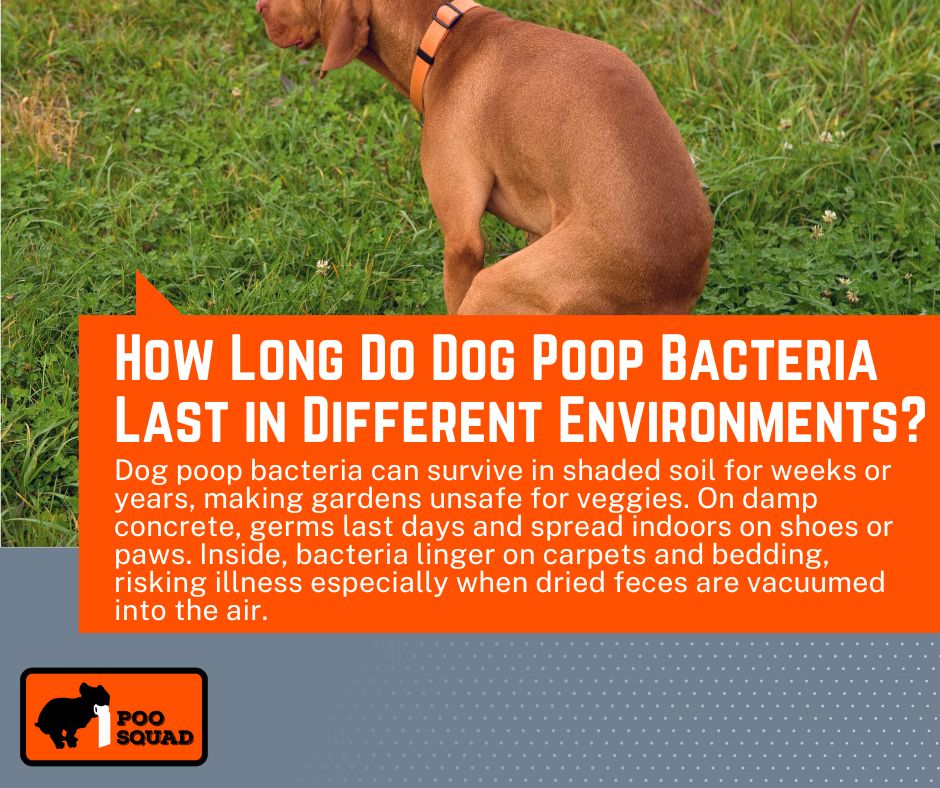
In moist, shaded soil, dog poop bacteria can survive for weeks or even years. Parasite eggs like roundworms may last across multiple seasons.
Is it safe to grow veggies there? Not right away. Especially not root vegetables. Sanitize and let the area rest first.
Concrete, Decks, and Patios
Hard surfaces aren’t germ-proof. On shady or damp concrete, bacteria can linger for days or weeks.
Step on an old spot? Germs can hitch a ride indoors via shoes, paws, or lawn gear.
Indoors (Carpets, Floors, Crates)
Inside, poop germs stick around for days, longer on soft surfaces like rugs or bedding.
Sick from indoor poop? Yes. Kids, pets, and immunocompromised folks are most at risk. Vacuuming dried feces can even spread bacteria through the air.
What Affects How Long Poop Germs Last?
Moisture, Shade, and Temperature
Cool, damp, shaded areas help bacteria thrive. Sun and heat kill surface germs quickly, but freezing temperatures don’t; they preserve bacteria. When it thaws, pathogens reactivate, especially if poop piled up over winter.
Subsurface Soil vs Surface Areas
Rain drives bacteria deeper into the soil, where they stay active longer. Rich, moist dirt preserves pathogens underground. A clean-looking yard might still be contaminated below. Rotate poop zones, rest the soil, and sanitize regularly.
How to Kill and Clean Up Dog Poop Bacteria, For Good
What Actually Works to Kill Poop Bacteria
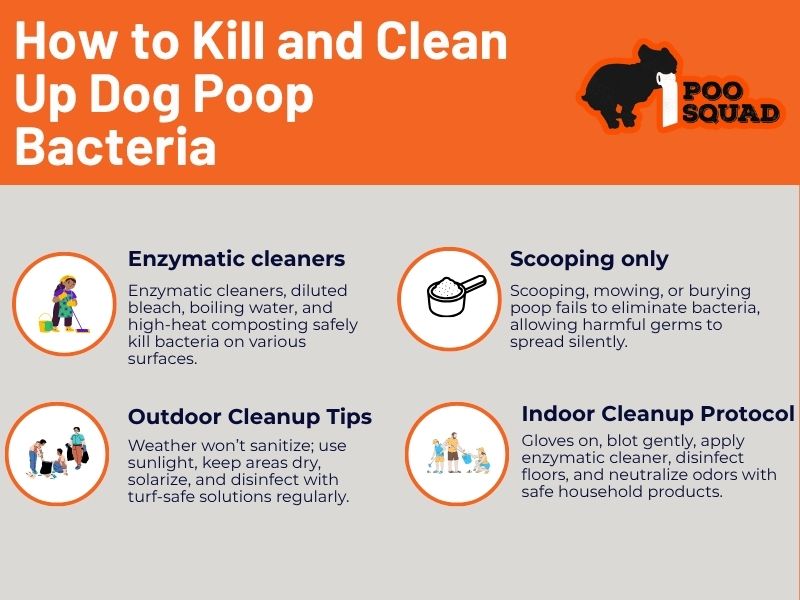
- Enzymatic cleaners: Break down organic waste and eliminate bacteria safely
- Diluted bleach (1:10): Powerful for hard, non-porous surfaces (avoid on grass)
- Boiling water scrubs: Effective for concrete, patios, and decks
- High-heat composting: Kills pathogens, but only if done properly with sufficient heat and turning
What Doesn’t Work (and Might Make Things Worse)
- Scooping only: Removes solids, but not the bacteria left behind
- Mowing over poop: Splatters germs and spreads contamination
- Burying it: Hides the waste but allows pathogens to survive and spread in the soil
Outdoor Cleanup Tips
- Don’t rely on weather: Rain spreads bacteria, and time alone won’t kill germs
- Use UV power: Sunlight naturally disinfects—maximize exposure
- Keep areas dry: Bacteria thrive in moisture; dry soil = safer soil
- Solarize problem spots: Cover with a clear plastic tarp to trap heat and kill microbes
- Use turf-safe disinfectants: Spray problem areas regularly to break down lingering germs
Indoor Cleanup Protocol
- Wear gloves and scoop solids into a sealed bag
- Blot wet areas gently; rubbing spreads bacteria deeper
- Apply the enzymatic cleaner, let it soak for 10–15 minutes
- Repeat blotting as needed, then air dry or use a fan
- Disinfect hard floors with pet-safe bleach or floor cleaner
- Eliminate odors using baking soda, activated charcoal, or vinegar
How to Keep Your Family (and Yard) Safe Long-Term
Poop cleanup is one thing. Long-term safety is another. Whether you have kids rolling in the grass, pets romping through the yard, or a vegetable garden in the works, staying proactive is key to keeping your outdoor space truly healthy.
Smart Prevention Strategies
Long-term safety starts with smart yard habits:
- Rotate potty zones: give areas time to recover
- Designate dog-safe spots: gravel or turf is easier to clean
- Add barriers: separate poop zones from gardens or play areas
- Use pro-level hygiene, like Poo Squad does:
- Sanitize tools and shoes between yards
- Never use customer trash bins
- Wear bright orange uniforms for visibility
- Send gate-close photos after every visit
When to Let Kids or Dogs Back in the Yard
After cleanup, give it time, especially if illness was involved:
- Dry, sunny yards: wait 1–2 weeks
- Shaded or wet spots: wait 2–4 weeks or sanitize first
- After illness: give extra rest time and sanitize soil
Now That You Know, Here’s What to Do Next
Most dog owners don’t realize how long poop bacteria can stick around. That “clean” yard or patio may still be risky.
If you’ve got the time and know-how to sanitize, rotate zones, and stay consistent, great.
But if you’re:
- A busy parent with barefoot kids
- A homeowner craving a stress-free yard
- A dog owner post-illness
DIY cleanup can be a lot, and missing a step can matter.
Why Work With Poo Squad?
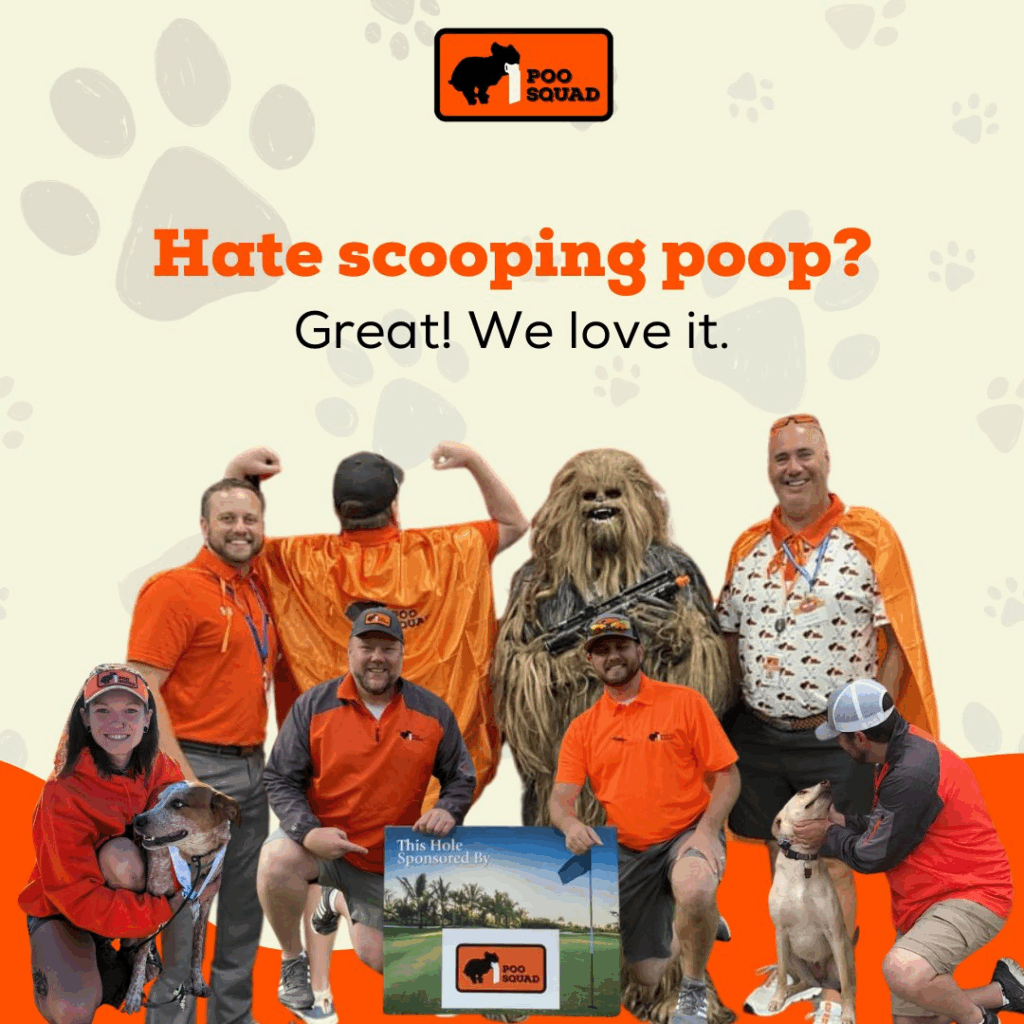
Because picking up poop is only part of the job, we’re here to protect your family’s health, your yard, and your time.
Most dog waste removal services stop at scooping. We don’t. Poo Squad, we bring a health-first approach that includes:
- Sanitized tools and footwear between every visit, no cross-contamination.
- Dog Poop Report Card, our scoopers flag abnormal waste so you catch health issues early.
- Pet Profile & Lost Pet Tag System: free QR-coded tags that reunite lost pets with their families in one scan.
- With text alerts and photo-proof gate closures, you’re always in the loop, and your pets are always safe.
And here’s the truth most companies won’t tell you: dog poop bacteria doesn’t just disappear when the mess is gone. It can linger in your yard, soil, and even make its way into your home. We’re one of the only companies that actively sanitize, help rotate potty zones, and provide real hygiene protocols that actually kill harmful bacteria like E. coli and Giardia.
FAQ
Whether you’re a dog parent, a backyard gardener, or just someone trying to keep their home clean, chances are you’ve asked at least one of these questions. Let’s clear up the most common concerns, without the fluff.
How long do bacteria live on dog poop?
Depends on the environment. On dry, sunny spots, just a few days. But in moist, shaded, or soil-rich areas, pathogens like Giardia and roundworms can survive for weeks, months, or even years. Even if the poop is gone, bacteria may linger in soil, mulch, or porous surfaces.
Can you get sick from the smell of poop?
Not directly, but the smell signals active microbes. Airborne particles or VOCs can irritate lungs, especially for people with asthma or weak immune systems. A persistent odor means it’s time to sanitize thoroughly.

Author: Chief Scooper
Jamie Coones is the Founder and Chief Scooper of Poo Squad, a national dog waste removal company operating in over 20 locations across the United States. Since launching the company in 2017, he has helped redefine the pooper scooper industry through systemized operations, subscription-based service models, and a mission-driven approach to business ownership.