Dogs eat dirt due to mineral deficiencies, gastrointestinal upset, or behavioral issues like anxiety or boredom. While occasional dirt-eating is common, repeated behavior can signal parasites, poor yard hygiene, or medical concerns that require veterinary attention.
Dogs eat dirt for physical or behavioral reasons, sometimes to soothe an upset stomach, other times because of missing nutrients like iron or zinc. In many cases, it begins as curiosity but becomes a pattern when medical, emotional, or environmental triggers persist.
Repeated dirt-eating is not a harmless quirk. It can expose your dog to parasites, old feces, chemical runoff, or bacteria that build up in unmaintained yards.
This is especially common in homes that lack regular pooper scooper service or sanitization routines. Even clean-looking soil can hide harmful contaminants, particularly in shared spaces like dog parks, apartment complexes, or multi-pet households.
What causes dogs to eat dirt, what health risks come with it, and how to tell when it has become serious?
You will also get a practical plan to fix the problem, including what your vet should check, how to improve yard hygiene, and how to break the habit through behavior redirection.
If your yard has gone too long without a deep clean, or you are noticing your dog targeting the same patch of dirt, this is not the moment to wait and see. It is the moment to act, because dirt-eating is not random. It is your dog’s signal that something deeper needs fixing.
Is It Normal for Dogs to Eat Dirt?
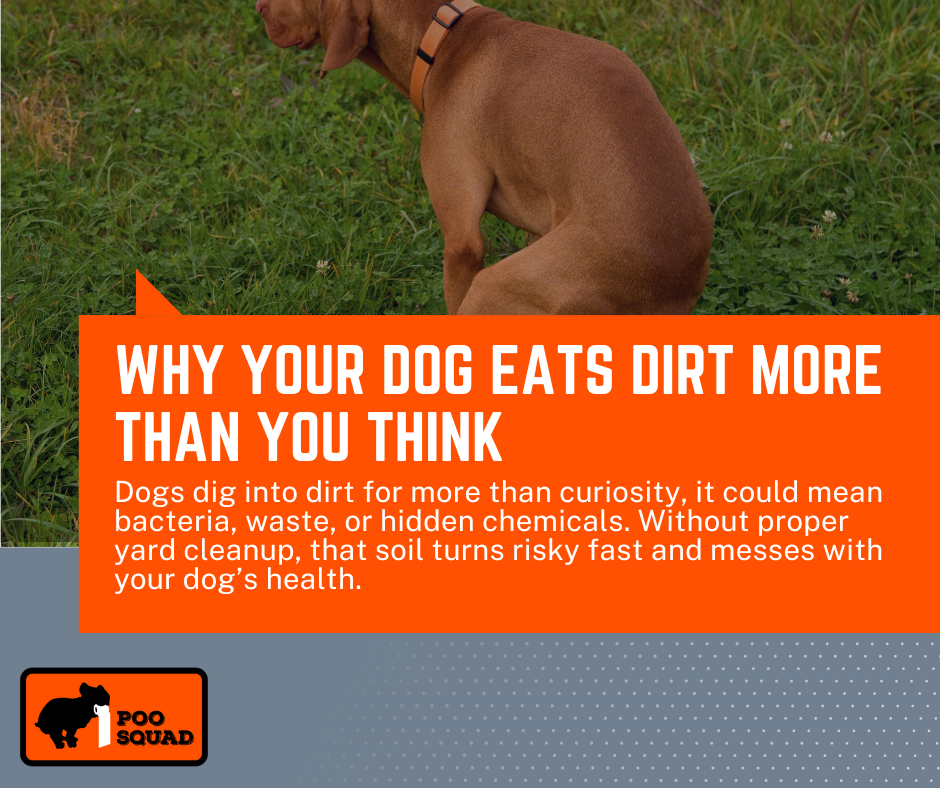
While it might not raise alarms the first time it happens, repeated dirt-eating can be a sign that something’s off. Many dogs explore the world with their mouths, and for puppies especially, tasting dirt can be part of that learning process.
But when an adult dog starts seeking out soil consistently, or worse, fixates on one particular spot in the yard, it’s usually more than curiosity.
Some dogs munch on dirt occasionally and move on, while others return to the same patch like it’s their buffet.
That behavior can point to more than a quirky habit. Soil often contains bacteria, old pet waste, fertilizer residue, or even traces of lawn chemicals. And when a yard hasn’t had regular residential pooper scooper service, those risks multiply fast.
This is one of the many reasons we emphasize consistent yard sanitation. It’s not about making lawns look nice; it’s about keeping your pets away from the hidden dangers beneath their paws. That’s also why we offer yard sanitization and deodorizer treatments as part of our regular maintenance options.
If your dog has a favorite dirt spot, especially in shared spaces like apartment complexes or unfenced community areas, that’s an even bigger red flag. You don’t always know what’s been left behind by other animals, or how long it’s been sitting there.
Common Medical Reasons Dogs Eat Dirt
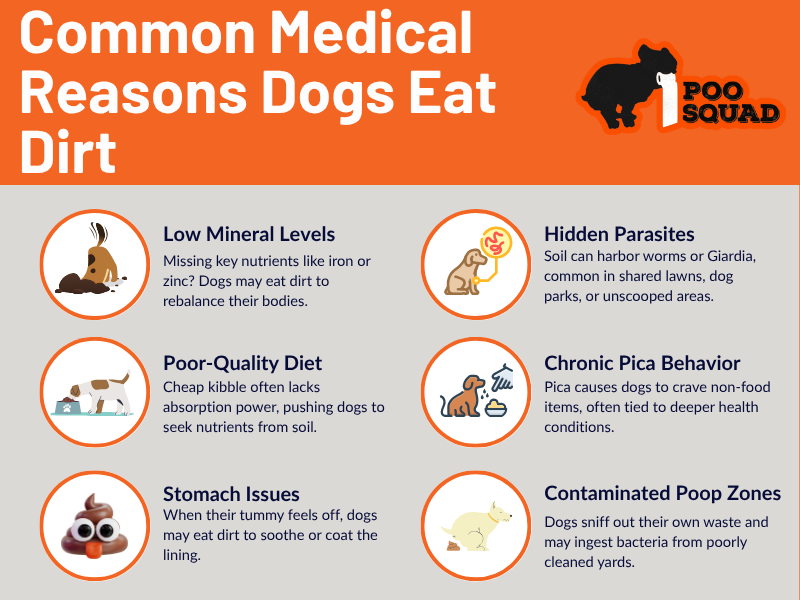
Dirt-eating is not always behavioral. In many cases, it starts inside the body. Dogs are instinct-driven, and when something feels off, especially in their stomach or blood chemistry, they often turn to the ground for answers. Here are the most common medical triggers that might be behind your dog’s habit.
Nutritional Deficiencies
One of the leading reasons dogs eat dirt is a shortage of essential minerals, especially iron or zinc. This condition, known as pica, causes animals to crave and consume non-food items. If your dog is eating a low-quality kibble or has trouble absorbing nutrients from their food, their body may be driving them to the dirt in search of what’s missing.
Veterinarians can run blood panels to check for anemia or mineral imbalances. In many cases, switching to a more complete diet or adding targeted supplements can resolve the issue entirely.
Gastrointestinal Upset
Some dogs eat grass when their stomach feels off. Others? They go straight for the dirt. It might be an effort to coat the stomach lining, calm discomfort, or even induce vomiting. While not all of these attempts are successful, the behavior often signals something deeper, like mild gastritis, an allergy, or something more serious.
If you’re unsure whether your dog’s poop looks normal or consistent from week to week, it’s worth understanding what your dog’s poop says about their health to identify early signs of trouble.
We’ve seen countless yards where owners didn’t realize something was wrong until a service tech noticed a drastic change in consistency or color. Monitoring stool is not glamorous, but it’s one of the best windows into your dog’s health.
And if the area your dog keeps targeting is also where they tend to relieve themselves, it’s possible they’re being re-exposed to bacteria from old waste. In these cases, scheduling consistent residential pooper scooper service can reduce the risk of reinfection and keep the yard safer overall.
Parasitic Infections
Soil is not always clean. Dogs that eat dirt could be ingesting microscopic parasites like roundworms, hookworms, or Giardia, especially in shared yards, parks, or places with poor sanitation. What starts as dirt-eating can quickly spiral into diarrhea, weight loss, or worse.
If your dog is frequently targeting specific outdoor spots, that could be a sign of contamination. This is why our team thoroughly sanitizes tools and shoes between properties. One missed scoop in one yard shouldn’t become another dog’s vet visit.
For extra protection, our yard sanitization and deodorizer treatments are safe for pets and help neutralize common pathogens hiding in the soil.
Behavioral Causes of Dirt Eating
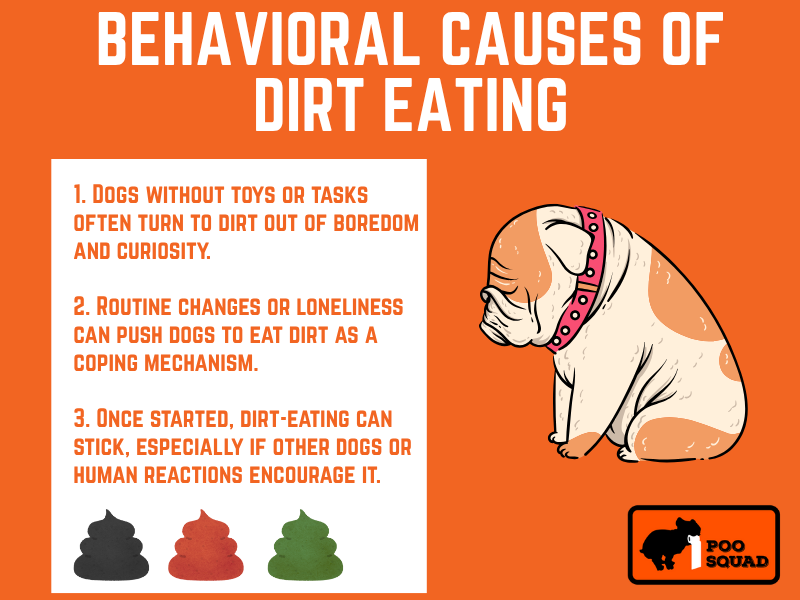
Not every dog that eats dirt has a medical issue. Many dogs turn to dirt simply because they’re bored, anxious, or left to their own devices a little too often. Behavior-driven dirt-eating is more common than most owners realize, especially in dogs that lack consistent mental and physical stimulation.
Boredom and Lack of Stimulation
If your dog has energy to burn but no outlet, digging or eating dirt can become a default behavior. When there’s no toy, task, or companion to keep them engaged, they go looking for something, anything, to do. And soil? It’s accessible, smells interesting, and usually gets a reaction from their humans.
This is especially true in single-dog households where daily enrichment is minimal. Dogs that are left alone for long periods often develop habits like this as a form of self-entertainment.
If your dog’s outdoor environment lacks structure or cleanliness, it makes the temptation even stronger.
We’ve noticed that customers who use our residential pooper scooper service report fewer behavioral incidents tied to their dog’s time in the yard, because when there’s less filth and distraction, dogs stay focused on play, not foraging.
Anxiety and Stress
Some dogs internalize stress physically. Moving homes, new routines, separation from their humans, these changes can manifest in strange behaviors, and dirt-eating is a common one. It becomes a coping mechanism. They’re not hungry. They’re unsettled.
A reliable daily routine helps. So does a yard that feels safe and familiar. We’ve worked with many clients dealing with nervous or reactive dogs, and one of the first things they notice after regular service is how much more relaxed their dogs seem outside. A clean yard sends a powerful signal of safety and consistency.
Learned or Habitual Behavior
Once dirt-eating starts, it can become a habit, even if the original reason no longer applies. Some dogs mimic other dogs they’ve seen. Others associate dirt with attention (good or bad). Over time, it becomes part of their routine.
In these cases, intervention is about both removal and redirection. Cleaning up the environment with regular waste pickup is one step. Introducing alternatives, like chew-safe enrichment toys or boundary training, is the other.
If your dog consistently returns to the same spot, especially in high-traffic or public areas, consider reinforcing boundaries and using safe deterrents. And if you’re dealing with a shared yard or community space, professional support through our commercial pooper scooper services can ensure every dog has a clean, distraction-free environment.
Hidden Risks Lurking in Dirt
It’s easy to underestimate dirt. Most people assume soil is “natural,” but when dogs start eating it, the dangers go far beyond a dirty mouth. Especially in today’s suburban yards, dirt is often packed with more than rocks and roots; it’s a hiding place for everything you don’t want your dog to ingest.
That innocent patch of ground might contain residue from chemical lawn treatments, decomposing feces, fertilizer runoff, or traces of bacteria from old messes that were never cleaned up. And when dogs snack on that mix, their immune systems take the hit.
We’ve seen it firsthand. In yards where dog waste builds up week after week, the bacteria don’t only sit on top; they seep into the soil.
Even after the poop is gone, the contamination remains, and it can include bacteria that pose real health risks to dogs and humans alike. That’s why our yard sanitization and deodorizer service is one of our most popular add-ons. It’s not about smell, it’s about safety.
In multi-family housing, HOAs, or rental properties, the risks multiply. We’ve worked with property managers who thought they had clean spaces, only to learn that unaddressed buildup had been quietly causing pet illness across units. It’s one of the reasons we’ve expanded our commercial pooper scooper services to include dog parks, apartment complexes, and shared green spaces.
Another growing concern we’ve noticed? Seasonal thaw. Winter hides a lot. Once the snow melts, all the waste that accumulated underneath starts seeping into the soil, releasing bacteria and odor into the yard. Spring might feel fresh, but for many homes, it’s when the real damage surfaces.
So, before brushing off your dog’s dirt obsession as “gross but harmless,” take a closer look at what might be buried underneath. Because when it comes to your dog’s health, clean yards are more than cosmetic, they’re protective.
How to Stop Your Dog from Eating Dirt
Changing a dog’s behavior starts with understanding the “why,” but fixing it means changing the environment, the routine, and sometimes, your support system. Dirt-eating may look simple, but it’s a symptom of something deeper, so solving it requires a layered approach.
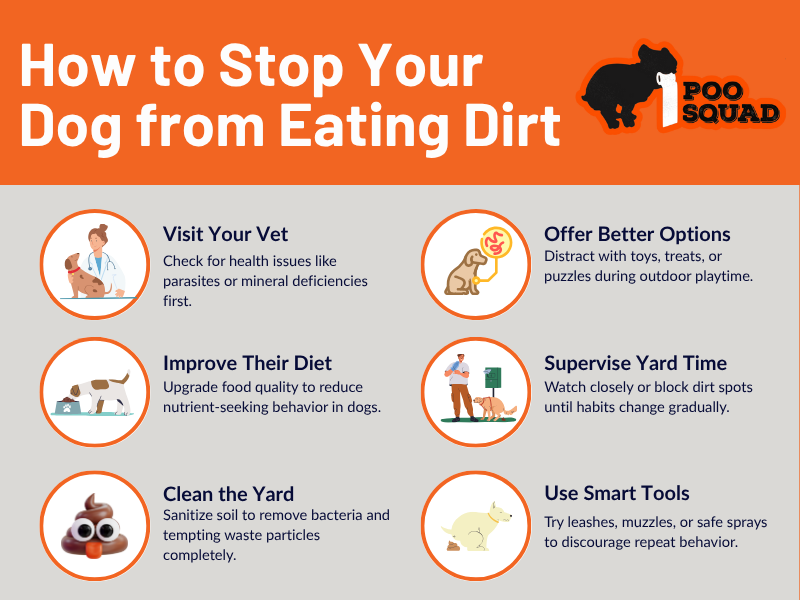
Step-by-Step Plan
1. Rule out medical causes
Start with a visit to your vet. Bloodwork can check for anemia, mineral deficiencies, or signs of intestinal parasites. If the issue is rooted in your dog’s health, no amount of behavioral training will fix it until that’s addressed.
2. Upgrade your dog’s diet
Talk to your vet about food quality. Low-grade kibble often leads to pica, especially in active dogs. Even if you’re feeding a “complete” formula, digestive issues can still prevent proper nutrient absorption.
3. Sanitize the yard
If your dog is snacking on contaminated soil, the solution may be as simple as removing the source. Our residential pooper scooper service keeps yards clean, while our yard sanitization treatments help neutralize lingering bacteria that can trigger or worsen the behavior.
4. Redirect the behavior
Give your dog a better option. Use chew toys, frozen Kongs, or outdoor puzzles to occupy their mouth and mind. Reinforce with praise or treats when they ignore the dirt and choose the toy instead.
5. Set boundaries and monitor
Block off favorite dirt spots if possible, or supervise backyard time. Dogs that eat dirt out of habit or stress often do it when left unsupervised. Building routine and structure outdoors can help break the cycle.
Tools That Help
Some pet owners find success using safe muzzles during yard time, especially while retraining. Others rely on leash control to redirect behavior mid-attempt. In certain cases, you can use bitter-tasting but pet-safe deterrent sprays on targeted soil areas, but only after confirming that the soil is free from harmful waste or chemicals.
Long term, nothing replaces consistency. A clean yard, a predictable routine, and regular monitoring will do more to change dirt-eating behavior than any gimmick or gadget. And if you’re juggling a busy schedule or managing multiple dogs, we can help lighten the load and keep your yard one step ahead of your pup’s habits.
When to Call the Vet
Not every dirt snack is a medical emergency, but certain signs should put you on high alert. If your dog is eating dirt persistently or obsessively, it’s no longer a quirk. It’s a red flag.
You know your dog best, and when something feels off, trust that instinct. Here are some situations where you shouldn’t wait:
- They’re eating dirt daily or multiple times a week
- They seem fixated on one patch of soil
- There’s vomiting, diarrhea, or changes in appetite
- Their energy level has dropped, or they seem uncomfortable
- You’ve noticed pale gums, weight loss, or visible bloating
These could indicate anything from GI distress to parasites to more serious conditions like anemia. A quick check-in with your vet could catch something early, and that peace of mind is worth every minute.
We’ve seen many customers first raise the issue of dirt-eating during casual conversation with our team. Often, it started as “he’s always in that one corner,” and led to uncovering bigger concerns. If your dog is targeting a spot that’s been contaminated with waste or runoff, those behaviors are your early warning system.
Preventive Yard Hygiene Tips
Clean yards aren’t only about aesthetics, they’re a critical piece of the puzzle when it comes to stopping dirt-eating and keeping dogs healthy. A lot of the issues that drive dogs to soil, bacteria, lingering smells, and contaminated waste can be removed with consistent sanitation.
We’ve walked through thousands of yards, and it’s obvious which ones get cleaned regularly and which ones don’t. You can smell it. You can see it. And more importantly, dogs can too. That lingering scent of old poop or soaked-in bacteria? It tells them that something’s there. Something interesting. Something worth licking or chewing.
That’s why our residential pooper scooper services are structured for weekly reliability. Not once-a-month touch-ups. Not “when we remember.” Because when waste sits, it starts to break down and seep into the ground. That’s when dirt becomes dangerous.
Our teams also go beyond the basics. We don’t use your trash bins. We don’t leave bags hanging off your fence. And we do not bring anything from another yard into yours. All tools and shoes are sanitized between jobs. Every visit is a reset.
For families with kids or multiple pets, our yard sanitation and deodorizing treatments offer an added layer of defense. They neutralize bacteria, eliminate odors, and make your outdoor space a place your dog can safely explore, without developing a dirt habit in the first place.
If your dog keeps going after the same spot over and over, especially in spring or after rain, it’s time to take a closer look. You might not see what’s there, but your dog does.
Should I Be Worried?
A single bite of dirt? Probably not a crisis. But when it becomes a pattern, especially paired with weird poop, low energy, or obsessive behavior, it’s time to take it seriously. Dirt-eating might look harmless, but it can be the first clue that something’s going on beneath the surface.
Whether it’s triggered by a lack of nutrients, a health issue, or a dirty environment, your dog’s mouth is telling you what their body can’t. The good news? You don’t have to figure it out alone.
Start with your vet. Then take a good look at your yard. And if the clean-up part feels overwhelming, or you’re not sure where to start, our dog poop yard cleanup guide breaks down how to handle it properly and consistently.
With scheduled pooper scooper services, pet-safe yard treatments, and the kind of crew that pays attention to what they’re scooping, you’ll get more than clean grass. You’ll get peace of mind.
Because no dog deserves to get sick from the place that’s supposed to be their safe space. And no pet parent should feel like they’re guessing when it comes to their dog’s health.

Author: Chief Scooper
Jamie Coones is the Founder and Chief Scooper of Poo Squad, a national dog waste removal company operating in over 20 locations across the United States. Since launching the company in 2017, he has helped redefine the pooper scooper industry through systemized operations, subscription-based service models, and a mission-driven approach to business ownership.