Dog poop is harmful to the environment. It pollutes waterways, spreads bacteria, damages soil, and disrupts ecosystems. Unlike composted manure, dog waste contains pathogens and excess nitrogen that harm grass and contaminate storm drains.
Dog poop is more than an eyesore; it’s an environmental hazard. When left on the ground, it pollutes local water systems, kills grass, spreads harmful bacteria, and attracts pests. It’s not natural fertilizer. It’s untreated waste that harms both private yards and public ecosystems.
Even one uncollected pile can trigger a chain of damage. Rain spreads it into storm drains, lawn mowers aerosolize its pathogens, and the bacteria it carries can linger in soil for weeks.
Our team sees the aftermath daily, burned lawns, stinking trails, even families calling us to mediate backyard disputes over dog mess.
This problem is not only gross, but it’s also a public health issue. Most pet owners don’t realize that dog poop contains E. coli, salmonella, and parasites like roundworms.
These can infect children, pets, and anyone exposed through contaminated grass or runoff. Unlike waste from wild animals, dog feces includes synthetic compounds from processed food, making it more toxic.
If you’ve ever wondered whether picking up after your dog matters, yes, it does. And this guide will explain why, from science-backed health risks to environmental fallout. We’ll also break down simple, effective solutions that help homeowners, HOAs, and communities keep shared spaces clean, safe, and stink-free.
What Happens When You Don’t Pick Up Dog Poop?
Leaving dog poop behind is not only a bad habit, it triggers a chain reaction of environmental problems. From stormwater pollution to the spread of parasites, what looks like a small mess on the lawn becomes a widespread ecological threat when ignored.
It Stays, and Spreads
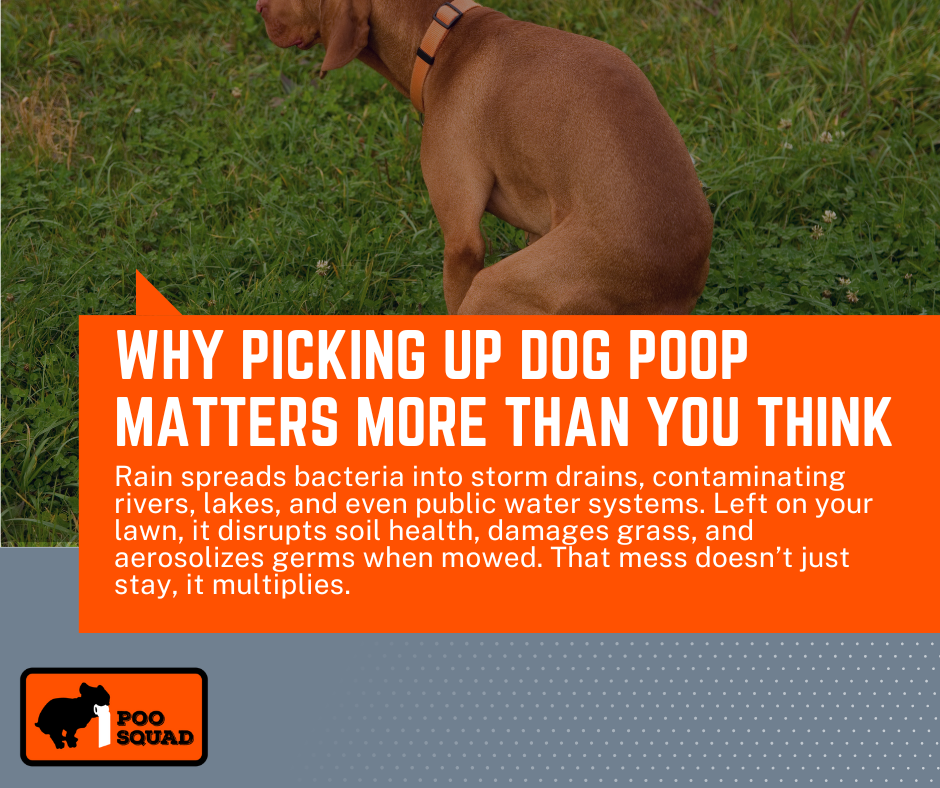
Dog poop doesn’t magically decompose into healthy soil. It sticks around for weeks or even months, especially in colder climates. During rainy seasons, that waste doesn’t vanish; it breaks apart and flows into storm drains, eventually contaminating rivers, lakes, and public water systems.
If you’ve ever walked past a trail that smelled awful or noticed brown patches overtaking your lawn, uncollected poop is likely the culprit. It leaches into the ground, overfeeds the soil with nitrogen, and disrupts the natural nutrient balance. And when lawns are left uncleaned for too long, mowing over that waste doesn’t solve the problem; it aerosolizes bacteria and spreads them across the yard.
Water Pollution Starts in Your Yard
Dog waste is one of the leading contributors to urban water pollution. Cities across the country have struggled with bacterial spikes in waterways traced back to uncollected pet waste. It only takes the feces from 100 dogs to produce enough bacteria to close a beach for swimming. And when multiplied by millions of dogs nationwide, the scale becomes staggering.
Our team has seen this firsthand in neighborhoods where runoff puddles carry bacteria-laden sludge from yards into streets and storm drains. That’s why our services prioritize not only removal but also sanitation, because your lawn is not only your lawn. It’s part of a larger ecosystem.
What’s in Dog Poop That Makes It So Harmful?
Dog poop is not only gross, but it’s also chemically and biologically dangerous. It’s packed with bacteria like E. coli and Salmonella, which can pose serious health risks to pets and humans when not properly cleaned up. What’s worse, many of these contaminants linger long after the poop itself is gone.
Loaded with Pathogens
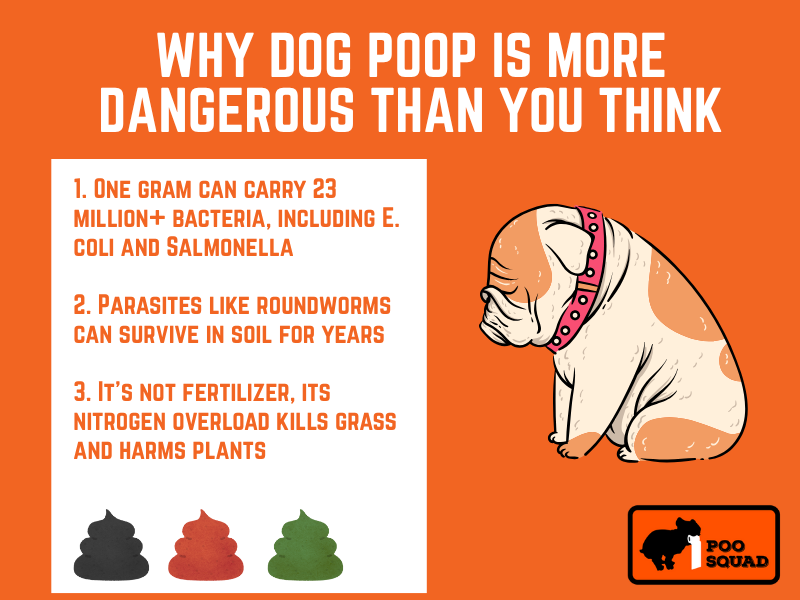
One gram of dog poop can contain over 23 million coliform bacteria, including E. coli, Salmonella, and Campylobacter, all of which are explained further in our guide on bacteria in dog poop and their health risks. These bacteria don’t only sit in the yard; they seep into the soil, cling to shoes, and wash into storm drains. Children, seniors, and pets are especially at risk for infections when exposed.
We’ve heard horror stories from customers whose dogs got sick from sniffing or eating old waste left behind in shared spaces. It’s why we take tool sanitization seriously between every yard visit, and why our pet-safe deodorizer services matter as much as pickup.
Parasites That Stick Around
Roundworms and hookworms are common in untreated dog feces. These parasites can live in the soil for years, silently waiting for a host. Families that play barefoot in their yards or gardeners who touch contaminated soil can unknowingly be exposed.
Some of our long-time customers reached out specifically because of this concern. One had a neighbor’s dog repeatedly use their front lawn, and their kids started getting mysterious stomach bugs. After switching to our weekly pickup, the issues stopped.
It’s Not Fertilizer, It’s Toxic
We often hear people say they mow over the poop or leave it because it’s “natural fertilizer.” Unfortunately, this is one of the most common and damaging myths. Dog poop is high in nitrogen and phosphorus, but unlike cow manure, it hasn’t been composted. Instead of enriching the soil, it overloads it, killing grass, burning plant roots, and throwing the microbial balance out of whack.
And yes, chopping it up with a mower spreads bacteria further across your yard. We’ve been called in to clean up lawns where this shortcut turned into a full-blown sanitation problem.
Why “Natural” Doesn’t Mean Harmless
Many dog owners assume that because dog poop is “natural,” it must be harmless. But when it comes to environmental impact, not all waste is created equal. What comes out of your pet is vastly different from what’s left behind by wildlife.
Wild Poop vs. Dog Poop
Wild animals live in balance with their ecosystems. Their diets are local, their waste decomposes without disruption, and their populations are naturally regulated. Dogs, on the other hand, eat processed food, often with preservatives, medications, and synthetic ingredients. This makes their poop more toxic to the environment.
Think about it: you wouldn’t throw leftover kibble into a river and call it compost.
So why treat your dog’s waste that way?
Off-Leash Doesn’t Mean Off-Responsibility
Hiking trails and forest paths often become accidental litter boxes when dog owners don’t clean up. Some think, “It’s the woods, it’ll break down.” But in heavily trafficked areas, this mindset adds up quickly.
We’ve cleaned parks where the waste wasn’t only visible, but it was part of the smell. Visitors have told us they avoid those trails during warmer months because the stench is unbearable. Not to mention, many dogs veer off-trail and poop in sensitive ecosystems like wetlands, where even small nutrient changes can cause serious harm.
And while it’s great to see more dog-friendly spaces, those spaces stay friendly only when everyone does their part. That’s why our commercial pooper scooper service for dog parks and trails has become one of our most requested offerings, especially in areas with frequent off-leash use.
Common Myths About Dog Waste, And the Hard Truth
There’s a lot of bad advice and outdated beliefs floating around when it comes to dog poop. From fertilizer myths to lazy excuses, these misconceptions lead to serious environmental and health risks. It’s time to set the record straight with facts we’ve learned from thousands of yards and real-world experience.
It’s One Pile Only
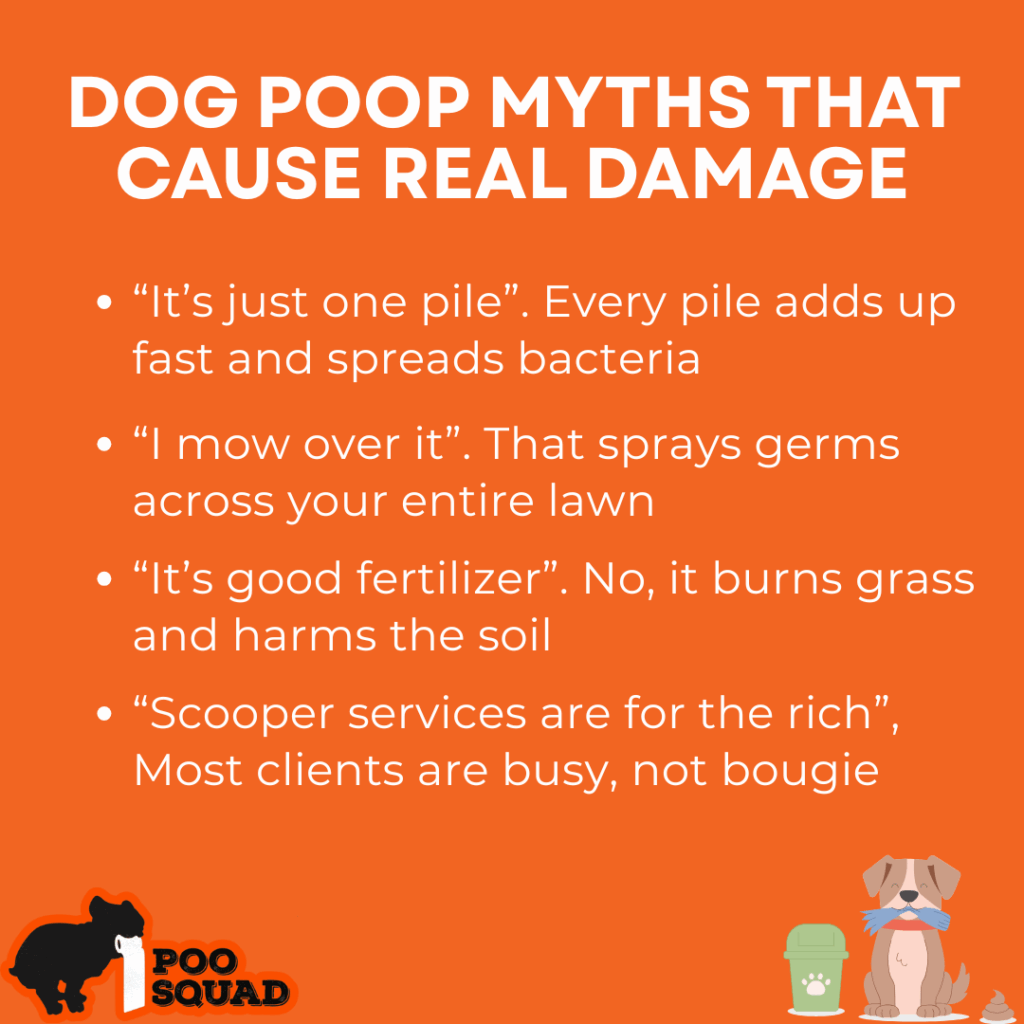
It’s never one pile only. Every neighborhood has dozens of dogs, and every week of neglect adds up. We’ve cleaned yards where families assumed one or two skips wouldn’t matter until the lawn turned brown and the bacteria count spiked. That “one pile” becomes a festering petri dish when repeated across an entire community.
I Chop It with the Lawn Mower”
This one’s more common than you’d think, and one of the worst habits out there. Chopping dog poop with a mower doesn’t eliminate it; it sprays microscopic bacteria across your entire lawn. We’ve had customers call in for sanitation treatments after trying this trick and watching their yard turn into a bacterial battlefield.
It’s Good Fertilizer
We love a good garden as much as anyone, but dog poop doesn’t belong near your flowers or your food. Unlike manure from herbivores, dog feces is acidic and packed with pathogens; it kills grass and damages your yard, as we detail in our post on whether dog poop is good for grass. If you want a healthy green space, step one is removing the waste completely.
Only Rich People Use a Pooper Scooper Service
Our clients aren’t looking to show off. They’re busy families, aging pet owners, or simply tired of stepping in it. Our services are affordable and designed to take this nasty job off your plate, without cutting corners.
Plastic Poop Bags Are Worse Than Leaving It
We get the concern about single-use plastics, and it’s valid. But leaving waste out in the open is far more damaging. The bacteria, parasites, and runoff pollution caused by one uncollected pile outweigh the footprint of a properly disposed of compostable bag. That’s why we recommend sustainable bag options and provide full pickup and disposal solutions that don’t trade one problem for another.
Better Solutions for Pet Waste Management
Cleaning up dog waste the right way is not complicated; it only takes consistency, the right tools, and a little support. Whether you’re managing your yard or overseeing shared community spaces, these solutions are practical, eco-conscious, and proven to work.
Pick It Up, Every Time, Everywhere
Yes, even in the woods. Even on that quick walk when you forgot a bag. Dog waste doesn’t belong in nature, and it doesn’t magically disappear. It sticks around, spreads bacteria, and damages ecosystems long after you’re gone. That’s why our team treats every cleanup, backyard, trail, or park with the same care and process.
Use Compostable or Biodegradable Bags
Concerned about plastic? So are we. That’s why we always recommend switching to compostable poop bags whenever possible. They break down faster, use fewer resources, and still keep the waste contained. What matters most is bagging it at all, because even the greenest materials don’t matter if the poop never gets picked up.
Try Pet Waste Digesters at Home
For homeowners looking to go a step further, pet waste digesters can be a smart backyard solution. These in-ground systems let you safely break down dog poop using natural enzymes, no bagging required. They’re great for those with multiple dogs or who want to reduce waste entirely. We’ve even helped a few customers install them as part of their sanitation upgrade plan.
Use a Professional Service
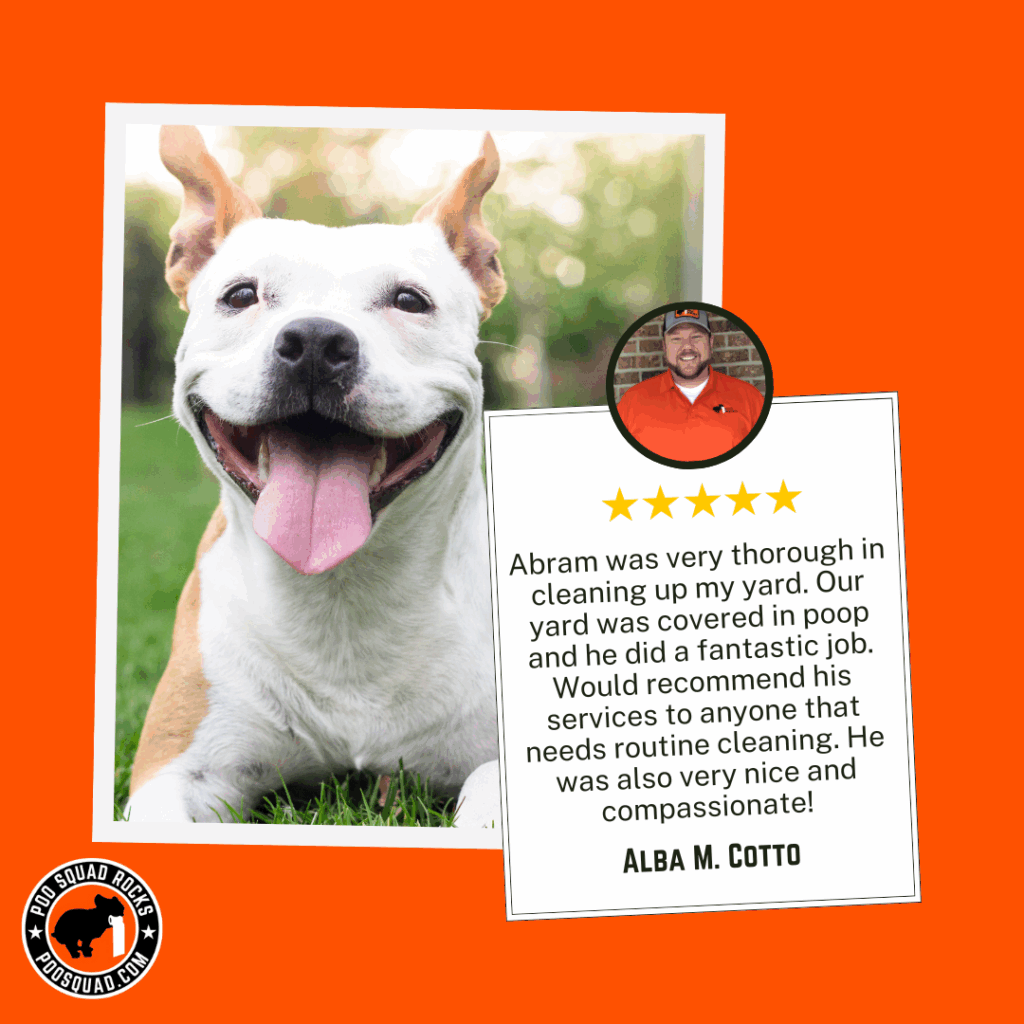
Sometimes, the best solution is to outsource it. And we don’t mean the neighbor’s kid with a bucket. Our residential service takes sanitation seriously, with background-checked employees, bright orange uniforms for visibility, and tools sanitized between every yard. We even send a photo of your latched gate so you know it was done right.
If you manage an apartment complex, HOA, or public park, our commercial poop scoopers specialize in large-scale cleanup that keeps common areas healthy and odor-free. From yard deodorizing to regular station maintenance, we’ve got it covered, so you don’t have to chase after complaints.
What Cities, Parks, and HOAs Can Do Better
While individual responsibility matters, community-wide solutions are what truly shift the tide. Municipalities, property managers, and park organizers all play a role in keeping public spaces clean, healthy, and poop-free. But too often, their systems are reactive instead of proactive.
Infrastructure That Works
Many dog owners want to do the right thing, but run into one basic obstacle: there’s nowhere to toss the bag. Public spaces need more waste stations, better signage, and regular maintenance.
There’s never a trash bin nearby. And that’s when the bags start getting tossed into bushes, or worse, left on the trail.
By increasing access to pet waste stations, cities, and HOAs can reduce littering, prevent runoff pollution, and foster shared accountability.
Education Over Enforcement
We’ve seen neighborhoods try shame tactics or fines to get residents to clean up after their dogs. While intentions are good, education tends to work better. Informational signs, community campaigns, and friendly reminders go a long way, especially when paired with services that make clean-up easier.
We’ve worked with several HOAs that offer discounted sanitation packages for residents as part of their community benefits. It’s a win-win: cleaner spaces, fewer complaints, and a better reputation.
Partnering with Professionals
Keeping shared spaces clean is a big job. That’s why many HOAs and property managers now rely on our commercial services to manage waste stations, deodorize common areas, and provide routine poop pickup that’s reliable and professional. When you combine infrastructure with service, the results are immediate, and the environment is better for it.
Concerns from People
Behind every ignored pile of poop is a person who had a reason or an excuse. We’ve listened to hundreds of stories from customers, pet owners, and parkgoers, and the concerns they raise are real. These aren’t people being lazy. They’re trying to make sense of a frustrating, messy situation that no one prepared them for.
My Dog Eats Other Dogs’ Poop. What Risks Are There?
Plenty. Ingesting another animal’s feces exposes your dog to parasites, viruses, and bacteria that can cause serious illness. We’ve had clients call in a panic after a routine sniff-and-snack turned into a $500 vet bill. This is exactly why consistent cleanup matters because your dog doesn’t know better, but we do.
Why Do Trails Smell So Bad in Summer?
Heat speeds up decomposition and releases odor-causing gases faster. When waste builds up on trails, the smell becomes unbearable. We’ve been called into community parks during peak summer months, where dog poop was ruining the experience for everyone. Our deodorizing services help, but nothing replaces prevention.
What Happens to Wildlife Exposed to Old Dog Poop?
The same thing that happens to your lawn, only worse. Excess nitrogen and bacteria from dog feces can disrupt delicate ecosystems, harm amphibians, and contaminate the food chain. One of our trial clients reported a spike in algae blooms near dog-walking paths. Cleanup wasn’t only cosmetic, it was critical.
I Want to Do the Right Thing, But I Hate Adding More Plastic to Landfills
We get it. That’s why we recommend switching to compostable bags or installing a pet waste digester if you’re able. Our team uses methods that reduce waste while still getting the job done safely. Skipping cleanup altogether is not a trade-off; it’s a trade-down.
Yes, Dog Poop is a Serious Environmental Problem
Dog poop is not only a backyard annoyance; it’s an underrecognized pollutant with serious environmental and health consequences. From bacterial runoff to toxic nutrient overload, leaving it behind creates real harm to our soil, water, and communities. The science is clear, and so is our experience: this stuff adds up.
That’s why every pile matters. Whether it’s a city sidewalk, a hiking trail, or your lawn, responsible waste management protects everyone. And doing it right doesn’t have to be complicated. It can start with a better bag, a more consistent routine, or letting us handle it for you.
We’re not only picking up poop, but we’re also helping families reclaim their yards, keeping dogs safe, and giving neighborhoods the clean outdoor spaces they deserve. Our residential dog poop pickup service makes it easy to stay consistent without the stress, while our commercial cleanup options are built for HOAs, parks, and property managers who want their shared spaces to stay fresh and professional.
So if you’re ready to make a real difference, we’re here with bright orange uniforms, sanitized tools, and the kind of obsessive follow-through that turns a dirty job into something we’re proud to do. Reach out today, and let’s clean this up together.

Author: Chief Scooper
Jamie Coones is the Founder and Chief Scooper of Poo Squad, a national dog waste removal company operating in over 20 locations across the United States. Since launching the company in 2017, he has helped redefine the pooper scooper industry through systemized operations, subscription-based service models, and a mission-driven approach to business ownership.