To decontaminate soil from dog poop, remove visible waste, dig out the top 2–6 inches of soil, apply pet-safe enzyme cleaners, and replace with compost or fresh fill. Avoid harsh chemicals. For long-term safety, treat the area and keep pets away until the soil is restored.
Dog poop can do more than ruin your yard; it can contaminate the soil, spread harmful bacteria like E. coli and salmonella, and leave behind parasites that linger for years. If your lawn doubles as a play space, garden, or pet area, cleaning up waste the right way is non-negotiable.
To decontaminate dog-soiled soil, start by removing any visible poop, then dig out the top 2 to 6 inches of affected earth. Apply an enzyme-based treatment to kill residual pathogens, then backfill with compost, clean topsoil, or mulch. This stops contamination at the root and restores your yard’s health safely.
Still dealing with lingering odor or repeat messes?
Our sanitation crews use commercial-grade enzyme sprays and disinfectant tools between every job, so your soil gets more than a quick cover-up. Whether it’s a one-time cleanup or ongoing service, we protect lawns, pets, and families with every scoop.
Why Dog Poop Contaminates Soil in the First Place
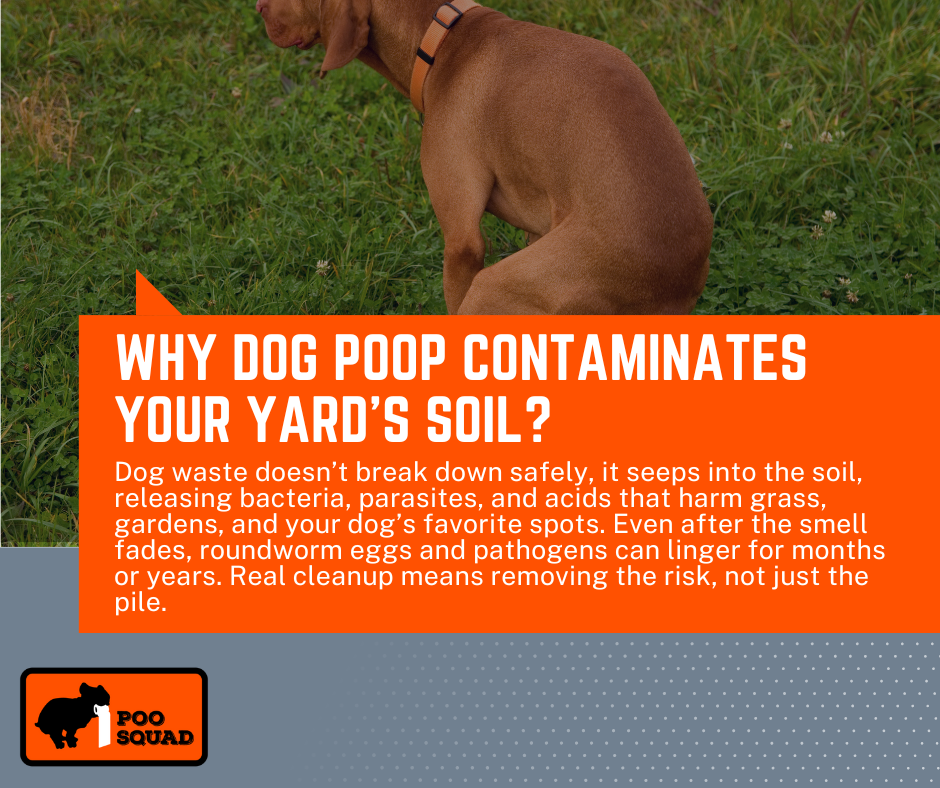
Dog poop doesn’t simply disappear. It seeps in. Beneath the surface, it deposits parasites, bacteria, and acids that kill grass and infect the soil. It’s not safe for gardens, play areas, or bare feet. Knowing what’s in that mess is the first step to fixing what’s damaged.
What’s in Dog Waste That Makes It Dangerous?
Dog waste can contain harmful bacteria like E. coli and Salmonella, along with parasites like roundworms and hookworms. Even dogs that seem healthy can shed microbes into the soil that linger for months. Once contaminated, the soil becomes a breeding ground for illness, especially dangerous for kids and immunocompromised pets.
Common Misconceptions (It’s Not Fertilizer)
Some folks still believe that dog waste works like cow manure in gardens. It doesn’t. Cow waste comes from a plant-based diet, while canine feces are acidic, protein-heavy, and packed with pathogens. Spread it around and you’re not feeding your lawn, you’re torching it. That high nitrogen content burns grass instead of helping it grow.
How Long Does Dog Poop Stay in Soil?
Left untreated, the waste itself may break down in several months, but the microbial damage can last far longer. Roundworm eggs can survive in soil for years. Even after the smell is gone, the risk remains.
That’s why routine residential poop removal services make a difference, especially in high-use backyards.
First Steps: Remove the Contamination Safely
Before you apply treatments or amendments, the contaminated material has to go. Skipping this step is like painting over mold. Physical removal, done right, sets the stage for effective decontamination. It’s also the step that separates a clean yard from one that keeps making people (and pets) sick.
How to Physically Remove Contaminated Soil
Start by identifying the most affected areas, where your dog usually goes, or where old waste has been left. Using gloves and a shovel, remove 2–6 inches of the topsoil. Bag it and dispose of it according to your local regulations. Don’t use the same shovel elsewhere until it’s been sanitized thoroughly.
If the contaminated area is near a vegetable bed or where kids play, it’s worth being aggressive with removal. Pathogens can spread via water runoff or even through gardening tools.
Want to avoid doing this more than once?
Set up a regular commercial dog waste removal plan if you’re managing shared or rental property.
When Should You Replace the Soil Completely?
If you’re dealing with an area where dog poop has broken down into the ground over time, full removal may be your best option. In some cases, like raised beds or compacted turf, it’s easier to dig it out and replace it with clean soil than to try and treat what’s been deeply compromised.
Can You Test Soil for Contamination?
While you can’t always see the damage, there are red flags: patches of dead grass, persistent odor, high fly activity, or pets getting sick after yard time. For serious concerns, especially where edibles are grown, lab testing is available. For everything else, assume contamination if dog poop was left long-term.
Decontamination Methods That Work
Once the visible waste and contaminated topsoil are removed, the real cleanup begins. Killing off what’s left behind, parasites, bacteria, odor, is where most homeowners either overdo it or completely miss the mark. Here’s what works (and what doesn’t) when you’re trying to restore your yard safely.
Enzyme-Based Cleaners and Soil Treatments
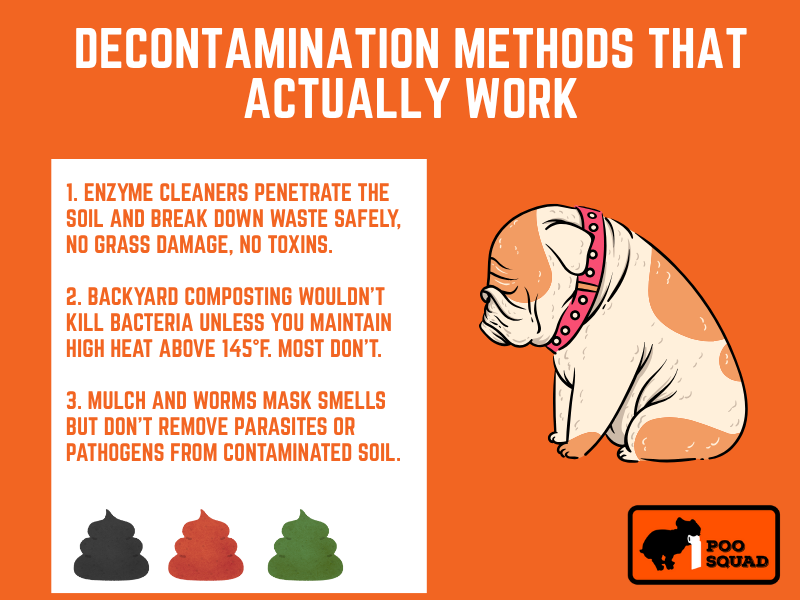
Enzyme treatments are among the safest and most effective ways to neutralize waste-related pathogens. These cleaners break down organic residue at a microbial level without harming grass, pets, or the environment.
We use commercial-grade products as part of our yard deodorizing and sanitation service, which is especially helpful after long-term buildup.
Look for soil-safe enzyme products that are marked as pet-friendly and biodegradable. These work best when applied after light watering, so they can penetrate the top few inches of soil.
Does Composting Help Decontaminate?
Only under very controlled conditions. Dog waste needs sustained high heat (over 145°F) for several days to kill off harmful organisms. Most backyard compost piles never reach that temperature. If you must compost it, limit its use to ornamental beds, not vegetable gardens. And make sure to keep it far from children’s play areas.
Do Worms or Natural Decomposition Help?
Worms won’t do the job. While they aid in general soil health, they can’t eliminate parasitic eggs or dangerous bacteria from dog feces. And relying on time to solve the issue? That can mean waiting a year or longer, with your yard off-limits the entire time.
Can You Mulch Over Contaminated Soil?
While mulching can help mask odor temporarily, it doesn’t treat the underlying bacteria. If odor control is your main goal, our post on how to get rid of dog poop smell in the yard explains what works.
Is It Safe to Garden After Soil Was Contaminated?
If you’re planning to grow vegetables or herbs in an area where dog waste once sat, pause before planting. Even if the poop is long gone, pathogens may not be. Restoring garden soil takes more than removing the visible mess. Here’s how to protect your food and your family.
Growing Vegetables in Previously Soiled Areas
Root vegetables and leafy greens are the biggest concerns. Pathogens from waste can cling to the roots or splash up onto leaves during watering. If your garden bed has been exposed, it’s best to skip food crops for at least a season, especially if you didn’t fully remove or treat the soil.
Want a safer workaround?
Build new raised beds filled with clean soil and compost. If your current bed is heavily contaminated, consider repurposing it for ornamental plants instead.
How Long Should You Wait to Replant?
With thorough removal and enzyme treatment, you can usually replant ornamental species within a few weeks. For edible crops, wait 6 to 12 months, depending on your climate and the severity of the contamination. Soil health doesn’t return overnight, and there’s no shortcut for safety.
If that feels like a long wait, consider using our residential poop removal service to stay ahead of future buildup and shorten the recovery period for your yard.
Raised Beds After Contamination: What to Know
If dog poop made it into your raised beds, especially if mixed into the soil, it’s safest to replace the fill entirely. The wood or plastic frame may still be usable, but the contents should go. Trying to “treat” contaminated soil in a confined bed is rarely worth the risk when food is involved.
Odor Control and Yard Deodorizing Tips
Even after the poop is gone, the smell can linger, and so can the bacteria causing it. That sour, earthy odor is more than unpleasant. It’s a sign your yard is not fully clean. The good news? With the right treatments, you can neutralize those smells without risking your lawn or your dog’s paws.
Why Dog Poop Smell Lingers in Soil
It’s not the waste itself that causes the long-term smell; it’s the residue. Proteins, nitrogen, and bacteria seep into the soil and start to ferment, especially when combined with moisture or heat. That smell? It’s your lawn waving a red flag that it’s still contaminated.
Safe, Pet-Friendly Deodorizers That Work
We use enzymatic deodorizers that target the root of the odor without introducing harsh chemicals into your soil. These are safe for pets and effective enough for yards that have been used as full-time potty zones. After a few applications, most odors fade significantly, especially when paired with sanitizing treatments.
Avoid using bleach or heavy chemical cleaners outside. They can damage grass, harm microbes that keep soil healthy, and irritate your dog’s skin or paws.
When It’s Time to Call in the Pros
Not every soil contamination issue can be handled with a shovel and a spray bottle. If the affected area is large, heavily used, or emotionally overwhelming, hiring professionals can save time and prevent costly mistakes. Sometimes, getting your yard back to normal means bringing in help that treats it like a health zone, not only a lawn.
What Services We Offer for Contaminated Yards
We handle more than pickup. Our crews use sanitized tools and pet-safe enzyme treatments to clean, disinfect, and deodorize outdoor areas. Whether it’s a home lawn, apartment complex, or shared park space, our commercial scooping services are designed to prevent the kind of lingering contamination that DIY efforts often miss.
Our techs show up in bright orange for easy visibility, carry ID badges you can scan for verification, and follow a strict triple-gate-check protocol. We don’t use your tools, your hose, or your trash bins, because keeping bacteria contained means thinking through every detail.
How We Prevent Soil Cross-Contamination
Every scoop route ends with sanitization. Tools and boots are disinfected between every property to prevent the spread of viruses like parvo or bacteria like E. coli. This is not optional; it’s the backbone of how we protect your yard, your pets, and your family.
Emotional Relief & Real Stories
We’ve seen it all: single moms too overwhelmed to tackle a yard, senior citizens who love their dog but can’t bend down anymore, and customers in tears when they see a clean space for the first time in months.
The emotional weight of a neglected yard is real. Our job is to lighten it, safely, professionally, and without judgment.
How to Prevent Future Contamination
Once your soil is clean, the last thing you want is to start the cycle over again. Prevention is not about perfection; it’s about systems. With the right setup and habits in place, you can keep your yard safe, odor-free, and easy to maintain no matter how many paws hit the ground.
Train Your Dog to Use a Designated Area
Creating a potty zone helps localize waste and makes cleanup easier. Use visual markers, fencing, or landscaping borders to separate the area from the rest of your lawn. This also reduces the spread of bacteria across high-traffic play zones or garden beds.
Install Pet Waste Stations or Buckets
A covered bucket or bin near the potty zone keeps the mess contained until your next pickup. We don’t use customer trash bins for a reason; they spread odor and potentially bacteria. A dedicated, closed container with its liner is safer and cleaner.
Use a Professional Scooping Service
Weekly or bi-weekly service keeps waste from building up and gives you peace of mind. We show up like clockwork and follow strict protocols to protect your lawn’s health.
Our residential services are designed for homeowners who don’t want to think about waste, but still want a yard their kids and pets can safely enjoy.
Monitor Pet Health Through Waste
The shape, smell, and consistency of your dog’s poop tell a story. If it suddenly changes, your soil might not be the only thing that needs attention. Chronic soft stools can contribute to deeper contamination. Catching it early means your dog stays healthy and your yard stays clean.
A Clean Yard Starts Below the Surface
Dog poop is not only a backyard eyesore; it’s a silent contaminant that affects your soil, your safety, and your peace of mind. Whether you’re dealing with months of buildup or a one-time accident, restoring your yard takes more than wishful thinking. It takes action.
From removing waste the right way to choosing safe decontamination methods and setting up long-term prevention, you now have a plan to turn things around. If you’re tired of guessing or ready to hand the mess over to someone who handles this stuff professionally every day, we’ve got your back.
Because every clean yard starts from the ground up, and every healthy home starts with one fewer pile to worry about.
Common Concerns About Contaminated Soil
Still have questions? You’re not alone. Many homeowners don’t realize how much damage dog poop can do until it’s already in the ground. These are some of the most common concerns we’ve heard from clients trying to reclaim their yard, and what you need to know before making a move.
Can Dog Poop Make Kids Sick from Soil?
Yes. Parasites like roundworms can survive in soil for years and infect children through simple contact, especially toddlers who crawl or put their hands in their mouths. If your yard is used by kids, safe soil is not optional; it’s essential.
Is It Safe to Grow Food Where Dog Poop Was?
Only if the soil is properly treated and enough time has passed. For root crops and leafy greens, contamination risks are higher. If you’re unsure, skip edibles for at least one full growing season and focus on flowers or ornamentals instead.
Can I Leave It and Let Nature Handle It?
Some homeowners assume the waste will break down naturally, or worse, mow over it. But as we explain in this piece on what dissolves dog poop in your yard, the wrong approach can make things worse.
What If I Already Mulched Over It?
Mulch helps suppress exposure but doesn’t neutralize contamination. If you mulched over untreated poop, remove what you can and follow up with proper soil treatment. The deeper the exposure, the more likely you’ll need to replace or amend the soil.
Do I Have to Dig Out the Soil, or Can I Treat It?
Lightly contaminated soil can often be treated with enzyme sprays and deodorizing agents. But if you’ve had months of accumulation, or the area is heavily trafficked, digging out and replacing the top few inches may be the safest route, especially near food or play zones.

Author: Chief Scooper
Jamie Coones is the Founder and Chief Scooper of Poo Squad, a national dog waste removal company operating in over 20 locations across the United States. Since launching the company in 2017, he has helped redefine the pooper scooper industry through systemized operations, subscription-based service models, and a mission-driven approach to business ownership.