If your neighbor’s yard smells like dog poop, start with a polite conversation. If that fails, check local ordinances, document the issue, and involve your HOA or animal control. In the meantime, use odor-blocking sprays, barriers, or hire sanitation services to protect your yard.
If your neighbor’s yard smells like dog poop, you’re not only dealing with a bad odor, you’re dealing with a disruption to your comfort, health, and quality of life. The smell can seep through windows, ruin outdoor meals, and even attract pests or bacteria. And while nobody wants to start a feud over feces, ignoring it won’t make it go away.
We’ve helped homeowners in every kind of neighborhood, HOAs, rentals, city lots, and rural properties, tackle this exact issue with solutions that work. Whether the problem is ongoing neglect or an overwhelmed pet owner next door, there are respectful, legal, and effective steps you can take right now.
You’ll learn how to approach your neighbor without sparking conflict, what rights you have under local ordinances, and how to control odors on your property while the long-term fix plays out. We’ll even show you how professional scooping and sanitation services can protect your yard and send a clear message, without ever saying a word.
Because you deserve a clean, livable yard, and yes, you can fix this without making enemies.
Why Does My Neighbor’s Yard Smell So Bad?
It’s easy to assume it’s “only poop,” but the smell could be coming from a few different issues. Knowing the root cause helps you decide whether it’s worth a conversation, a complaint, or a cleanup strategy of your own.
Common Causes Beyond Just Poop
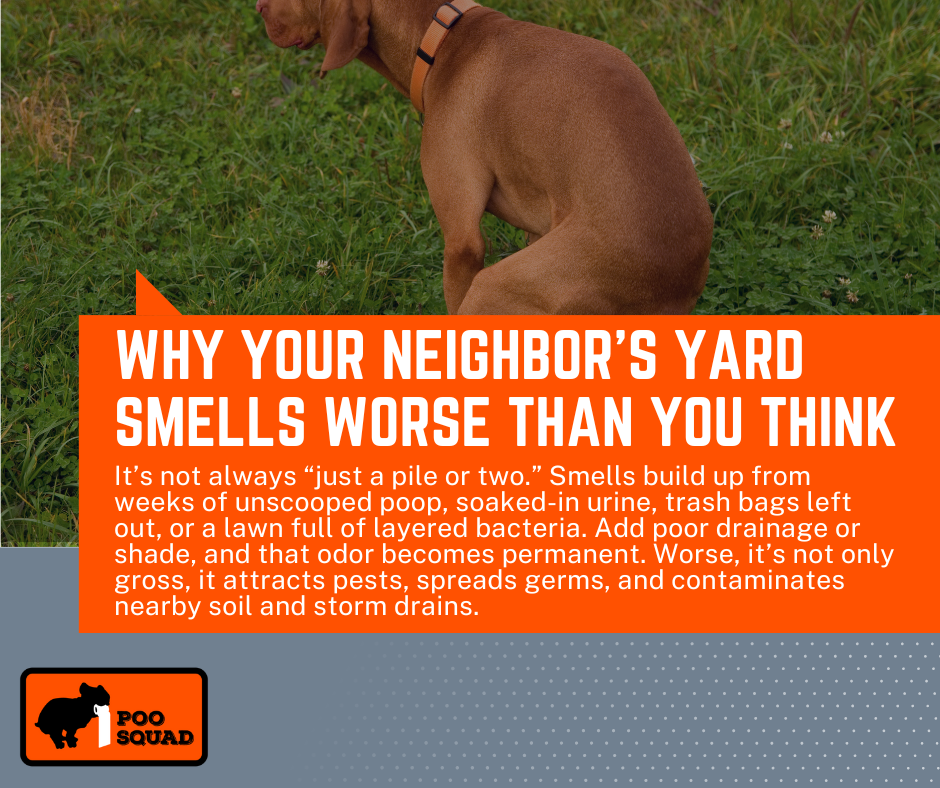
Dog waste is usually the main offender, but it’s not always about one pile rotting in the sun. In many cases, smells build up from a combination of factors:
- Old or layered poop that hasn’t been scooped in weeks
- Dog urine soaking into the soil, especially in shaded or poorly drained yards
- Trash bins or bags used for disposal and left uncovered
- Shared lawns where responsibility gets passed like a hot potato
- Improper DIY “solutions” like mowing over dog poop or using household cleaners that only push bacteria deeper into the yard
If your neighbor’s lawn looks like a poop minefield, chances are they’ve fallen behind or never had a system to begin with.
Health & Environmental Risks
This is not only about your comfort. Unattended dog waste creates a genuine health hazard for families and pets:
- Bacteria overload: Dog poop can carry E. coli, Salmonella, and Campylobacter.
- Parasites: Roundworms and hookworms can be transmitted through soil.
- Contamination: Rain can carry bacteria into storm drains, which then flow into local streams and lakes.
- Attraction for pests: Flies, rats, and other critters love a neglected backyard buffet.
Want a fast way to protect your property?
Our residential pooper scooper service includes sanitation practices between every yard, so you’re never taking home someone else’s problem.
How to Talk to a Neighbor About the Dog Poop Smell
Bringing up the smell of dog poop with your neighbor can feel awkward, but ignoring it only makes the problem worse. Whether you’re dealing with a well-meaning neighbor who’s overwhelmed or someone who simply doesn’t care, a respectful conversation is almost always the best place to start.

Start with Empathy, Not Accusation
You don’t want to launch a neighborhood feud over poop. People respond better when they don’t feel attacked. Try approaching them casually and saying something like:
“Hey, I’ve noticed a strong odor lately, and I wasn’t sure if you’ve had a chance to check your yard. Is everything okay?”
This keeps things neighborly while still addressing the issue. And if the conversation goes well, offer solutions, like mentioning our commercial pooper scooper services for folks managing large yards, rentals, or multiple dogs.
What If They’re Elderly or Overwhelmed?
This happens more than people realize. We’ve met plenty of seniors and busy parents who physically can’t keep up. If it seems like your neighbor is struggling, offer helpful options instead of complaints.
For example, you could say:
“If it’s been hard to keep up, there are companies that specialize in this stuff. I use one myself and it’s a game-changer.”
Our teams are trained to be discreet and supportive, not judgmental, especially for clients who might need help but don’t know where to start.
When the Yard Is Shared (Duplexes, Rentals)
If you live in a rental or duplex where yards are shared, things get tricky. The best move is to:
- Speak to the landlord or property manager
- Document who’s responsible for pet cleanup in your lease or HOA rules
- Use photo evidence to show the buildup without being confrontational
This is not about tattling, it’s about maintaining a livable space. If you’ve had trouble with recurring messes in shared yards, adding sanitizer treatments into the routine might solve the problem for everyone without a fight.
What Are Your Legal Options?
If polite conversation fails and the smell of dog waste continues to dominate your backyard, it may be time to consider your legal rights. There are steps you can take through city ordinances, HOA regulations, or even public health channels, but documentation and patience matter just as much as persistence.
Local Ordinances and Animal Control
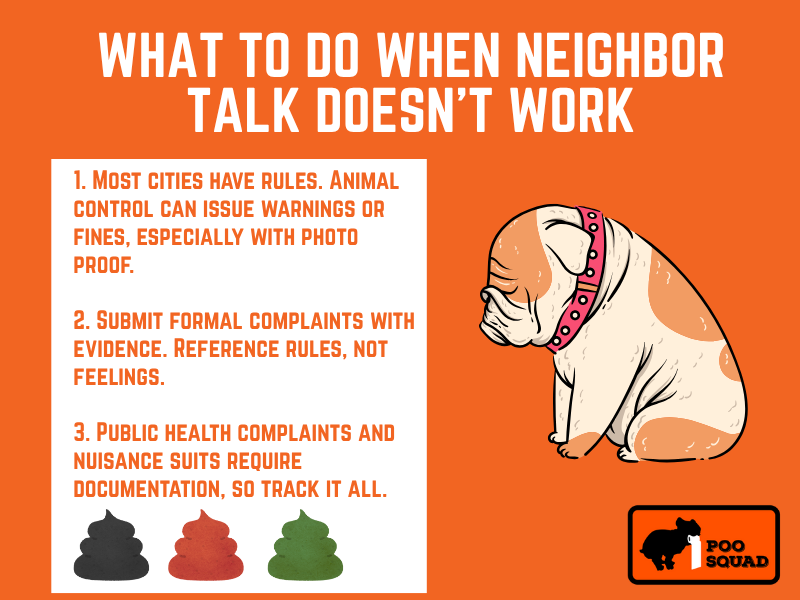
Most cities have pet waste laws on the books, often buried in public health or nuisance codes. These rules typically require pet owners to pick up after their animals or face fines. If you’re seeing consistent neglect:
- Call your local animal control department or code enforcement
- Share evidence like time-stamped photos (especially if poop is visible near your property)
- Document communication attempts, so you have a paper trail
And yes, setting up a camera is legal in most cases, as long as it’s on your property and not pointing into private areas like windows or inside fenced yards. We’ve seen clients use simple doorbell cams or motion-triggered devices to prove repeated offenses.
HOA or Property Manager Enforcement
If you’re in a neighborhood governed by a homeowners association or you rent from a landlord, they may have more power than you think. Most HOAs have covenants that prohibit unsanitary conditions and offensive smells.
Your move:
- Submit a formal complaint in writing
- Reference specific clauses in the HOA rules
- Include your evidence, but keep the tone factual, not emotional
If you’re a renter dealing with smells from next door, contact your property manager with a specific request to address the problem. They may have more leverage than you do, especially if the offending tenant is also a renter.
Can You Sue or Withhold Rent?
It depends on your location, and it’s rarely the first best step. Odor complaints can sometimes qualify as a public nuisance or health violation, but the bar is high:
- You’ll need documentation, photos, and written communication
- Courts may require you to prove the smell interferes with your “quiet enjoyment” of your property
- Some jurisdictions allow you to contact public health departments for formal inspections
What matters most is showing that you tried everything else first. When it comes to something like persistent dog waste smells, legal action usually works best as a last resort, not a first move.
Short-Term Odor Control Tips You Can Use Today
While you’re working on the long-term fix, whether that’s talking to your neighbor or filing a complaint, you still need to breathe easy in your yard. Fortunately, there are a few proven tricks that can help reduce the smell of dog poop right now without resorting to chemical overkill or DIY disasters.
Natural Deodorizers for Fences and Yards
If the smell is strongest near a shared fence or window, start there. Odors tend to cling to porous materials, especially when combined with dog pee. If you’re noticing yellow grass or dead patches, it could be due to urine damage as well. Here’s how dog pee affects your lawn. Some pet-safe remedies that work:
- White vinegar + water spray: Neutralizes odors without damaging plants
- Enzyme-based cleaners: Break down organic waste at the molecular level
- Coffee grounds or baking soda: Spread lightly to absorb lingering stink
- Citrus peels: Scatter around fence lines, dogs hate the smell, and so do flies
These don’t only mask odor, they work at the source. For especially stubborn smells, a professional-grade treatment from our yard sanitation team might be the difference between surviving and thriving.
DIY Physical Barriers
Sometimes the best odor blocker is a visual one. Creating a clear line between your yard and your neighbor’s mess does two things: it reduces airflow from their side and reminds them someone is paying attention.
Try:
- Low hedges or raised planters near the property line
- Mulch borders or gravel strips where urine and poop smells gather
- Pet-safe repellents to keep animals from wandering over and marking your turf
These small upgrades do more than block smell; they reclaim your yard.
Pro Tip: Deodorizer Treatments Work
We’ve cleaned thousands of yards, and when it comes to stubborn stink, nothing beats a proper sanitizing treatment. We don’t only scoop, we sanitize tools between every yard and treat surfaces like patios, dog runs, and decks to kill odor-causing bacteria.
If the smell from next door is drifting into your life, we can help you take control of your half, without waiting on anyone else to act.
When the Smell Won’t Go Away
Sometimes, no amount of vinegar spray or polite conversation makes a dent. That lingering, nose-burning odor might be telling you something bigger: the yard next door is not only dirty, it’s contaminated. If it’s been months (or years), it might be time to think beyond surface-level solutions.
Is It Time to Replace Soil or Grass?
Dog poop doesn’t disappear only it breaks down into the soil. And depending on what’s in it, the lingering scent could be even worse. Some dog poop can be dangerously toxic or filled with bacteria, especially when left for weeks. Over time, that creates a breeding ground for bacteria, ammonia buildup, and persistent stink, especially during warmer months. If you’re smelling a sour or ammonia-like odor even when no waste is visible, it’s likely baked into the dirt.
That’s when it may be worth:
- Replacing topsoil in affected zones
- Installing fresh sod or reseeding dead patches
- Aerating compacted soil to allow better drainage
Even if the yard is not yours, taking care of your lawn can create a healthier buffer zone. Our residential scooping service ensures your property stays clean, so you’re not adding to the problem or breathing it in.
Frequent Missteps to Avoid
When folks try to fix the smell fast, they often make it worse. Here’s what not to do:
- Mowing over dog poop: All this does is smear bacteria across the yard and release more odor into the air.
- Using bleach or ammonia: These can burn grass, harm pets, and won’t neutralize deep-set bacteria.
- Spraying essential oils: Sounds nice in theory, but it only adds scent on top of the stink without solving the issue.
The key is removing the bacteria, not covering it up. When in doubt, go with treatments that are safe for both pets and soil, especially in high-traffic areas.
Lasting Solutions That Work
If you’re tired of temporary fixes and neighborly excuses, you need strategies that stick. Long-term odor control comes down to consistency, sanitation, and smart systems, especially when you’re not the one creating the mess. Whether you’re protecting your yard or influencing change next door, these solutions hold up.
Get a Professional Scooper Involved
Most neighbors don’t want to hear that their yard smells, but they will respond to easy options. A great way to suggest change without conflict? Mentioning how easy and affordable it is to hire a professional.
When we’re on the job, we:
- Scoop thoroughly on schedule (no skips, no surprises)
- Sanitize our tools and footwear between each yard
- Never use client trash bins or water hoses
- Send photo confirmation of secured gates
- Wear bright orange so you know who’s in your yard at all times
If your neighbor is open to change but overwhelmed, a service like ours can take the problem off their plate and out of your nose.
Pet Profile Tagging for Lost Dog Risk
One unexpected bonus?
Clients who use our pet profile program get custom dog tags that link to an online profile. It’s not directly about odor, but if your neighborhood has loose dogs contributing to mystery piles, this tool can help get them home faster and make pet owners more accountable.
Sometimes the solution is not making someone feel bad, it’s showing them how easy it is to do better.
You Deserve a Clean, Odor-Free Yard
Living next to a yard that smells like dog poop is not only annoying, it’s disruptive. It interferes with your peace, your health, and your ability to enjoy the space you’ve worked hard to create. Whether the problem is a neglected lawn, shared responsibility, or a neighbor who’s overwhelmed, you have options.
Start with a respectful conversation. Back it up with documentation. Use simple odor control strategies in your yard to regain a sense of control. And if nothing works, lean on your HOA, city, or professional services for help.
We’ve built our services around solving these exact problems. From residential poop pickup to commercial cleanups and odor control treatments, our team shows up so you don’t have to hold your breath.
You shouldn’t have to choose between being a good neighbor and having a clean backyard. With the right steps, you can have both.
Frequently Asked Questions
Real neighbors have real questions, and many of them go unanswered. Below are the most common concerns we hear from people dealing with dog poop issues from next door, answered with no fluff and plenty of empathy.
Can I record a dog pooping near my fence for evidence?
Yes, as long as you’re recording from your property and not pointing the camera into someone’s private spaces (like their windows or inside their fenced yard). Footage can support a complaint, especially if animal control or an HOA asks for documentation.
What if the smell is attracting bugs or rats?
This is more common than people realize. Dog poop, especially if it’s layered or mixed with old trash bags, draws flies, maggots, and even rodents. A strong sanitation program, like regular scooping and proper yard deodorizing, can disrupt the food source and help drive pests away.
Can I be fined if my yard smells, even if it’s the neighbor’s fault?
Unfortunately, yes. If an HOA or city inspector visits and can’t determine who’s at fault, both properties may come under scrutiny. That’s why it’s smart to document the problem and take care of your side with consistent cleanup. A sanitized yard tells the full story.
What if I report it and nothing changes?
Persistence matters. After an initial complaint, follow up with your HOA, property manager, or local code enforcement. Add photos, keep a record of each communication, and ask for updates in writing. You’re not being a nuisance, you’re holding others accountable.
How can I explain the problem without seeming petty?
Focus on health and safety, not blame. Try saying something like:
I’ve been noticing a strong smell, and I’m a little worried about bacteria or flies with my kids playing outside.”
That kind of framing shows concern, not criticism, and makes it easier for your neighbor to take action without feeling attacked.

Author: Chief Scooper
Jamie Coones is the Founder and Chief Scooper of Poo Squad, a national dog waste removal company operating in over 20 locations across the United States. Since launching the company in 2017, he has helped redefine the pooper scooper industry through systemized operations, subscription-based service models, and a mission-driven approach to business ownership.